Botanical Overview
Euclea natalensis belongs to the Ebenaceae family. Limited but reliable traditional records indicate this plant has recognized medicinal applications in one or more healing traditions. The ebony family (Ebenaceae) includes trees and shrubs with hard, dense wood and alternate leaves. The plants are dioecious (male and female flowers on separate plants) and produce berry-like fruits. Several species are valued for their dark heartwood used in woodworking.
General Description
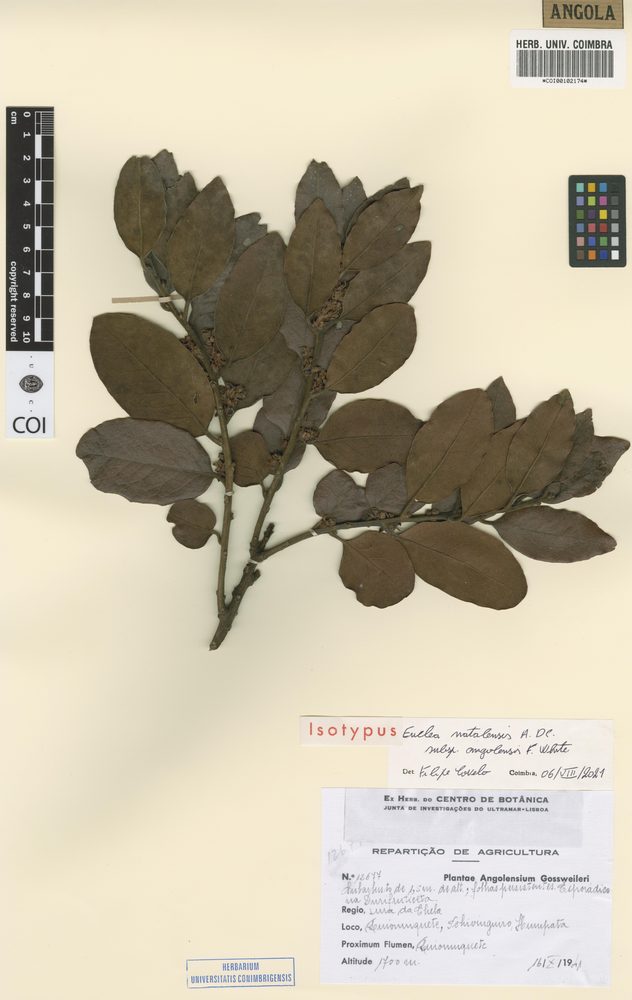
It occurs from Ethiopia and Somalia in the north, southwards to the Western Cape, South Africa. It has nectar and also contains pollen Its hirsute, leathery leaves have an opposite arrangement, and the flower sprays grow from the leaf axils. The spherical fruit appear from October to June.
Family Context
The Ebenaceae family is primarily tropical. Notable medicinal members include:
- Diospyros tomentosa — 29 documented uses
- Persimmon — 24 documented uses
- American Persimmon — 19 documented uses
- Diospyros melanoxylon — 15 documented uses
Geographic Distribution
Euclea natalensis has been recorded in 10 countries and territories worldwide, including Angola, Botswana, Kenya, Malawi, Mozambique, and others.
Traditional Uses
Euclea natalensis has been traditionally used for skin and wound care.
Skin and wound care.
- Sore
For skin conditions, the fresh or dried plant is applied topically as a poultice, wash, or compress. A strong decoction can be used to clean wounds and sores. The antimicrobial properties help prevent infection while promoting tissue repair.
Active Compounds
Phytochemical research has identified 1 compound in this species: betulinic-acid.