Botanical Overview
Euclea crispa belongs to the Ebenaceae family. While not among the most extensively documented medicinal plants, this species has recorded uses that warrant attention from researchers and practitioners. The ebony family (Ebenaceae) includes trees and shrubs with hard, dense wood and alternate leaves. The plants are dioecious (male and female flowers on separate plants) and produce berry-like fruits. Several species are valued for their dark heartwood used in woodworking.
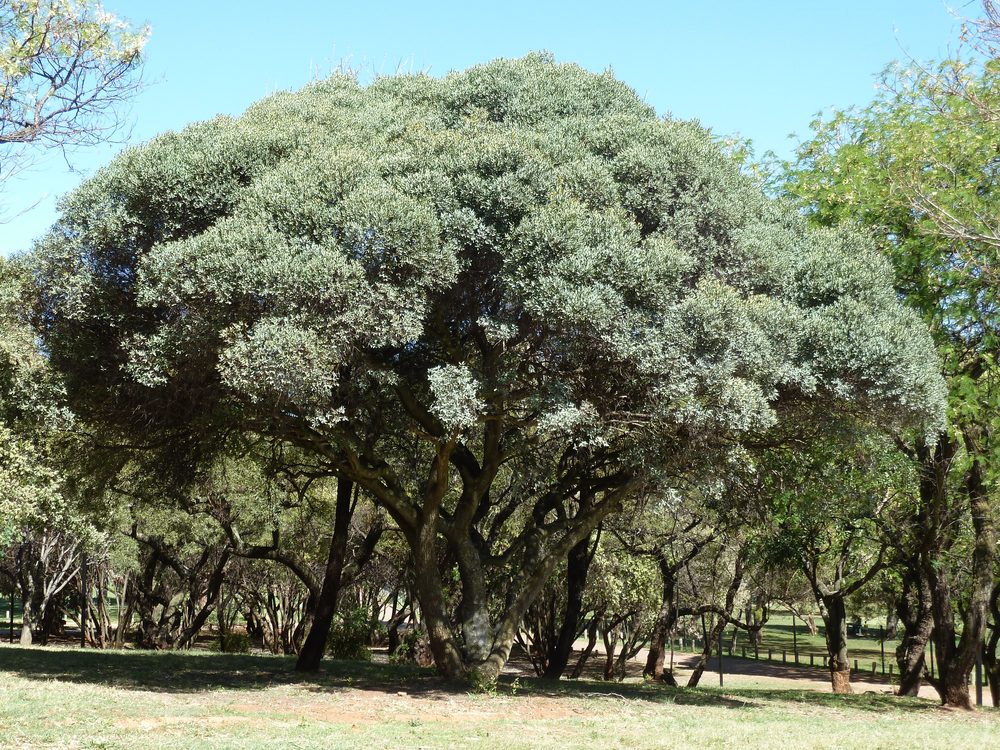
General Description
The hardy and evergreen plants may form a dense stand of shrubs, or grow to tree size. It is widespread and common in the interior regions of southern Africa, and occurs northward to the tropics. Though some are present near the South African south and east coasts, they generally occur at middle to high altitudes. It is readily recognizable from its much-branched structure and dull bluish foliage colour. Those bearing lanceolate leaves may however resemble the Wild olive, another common species of the interior plateaus.
Family Context
The Ebenaceae family is primarily tropical. Notable medicinal members include:
- Diospyros tomentosa — 29 documented uses
- Persimmon — 24 documented uses
- American Persimmon — 19 documented uses
- Diospyros melanoxylon — 15 documented uses
Geographic Distribution
Euclea crispa has been recorded in 10 countries and territories worldwide, including Angola, Lesotho, Malawi, Mozambique, Eswatini, and others.
Active Compounds
Phytochemical research has identified 1 compound in this species: betulin.