Botanical Overview
Eucalyptus botryoides is a species in the Myrtaceae family. The myrtle family (Myrtaceae) includes trees and shrubs with opposite leaves that contain aromatic oil glands. The flowers are showy with numerous stamens, and the fruits are often fleshy berries or capsules. Many species produce essential oils with antiseptic and antimicrobial properties. Although comprehensive ethnobotanical records are limited, phytochemical studies have identified 30 compounds in this species, suggesting potential medicinal value.
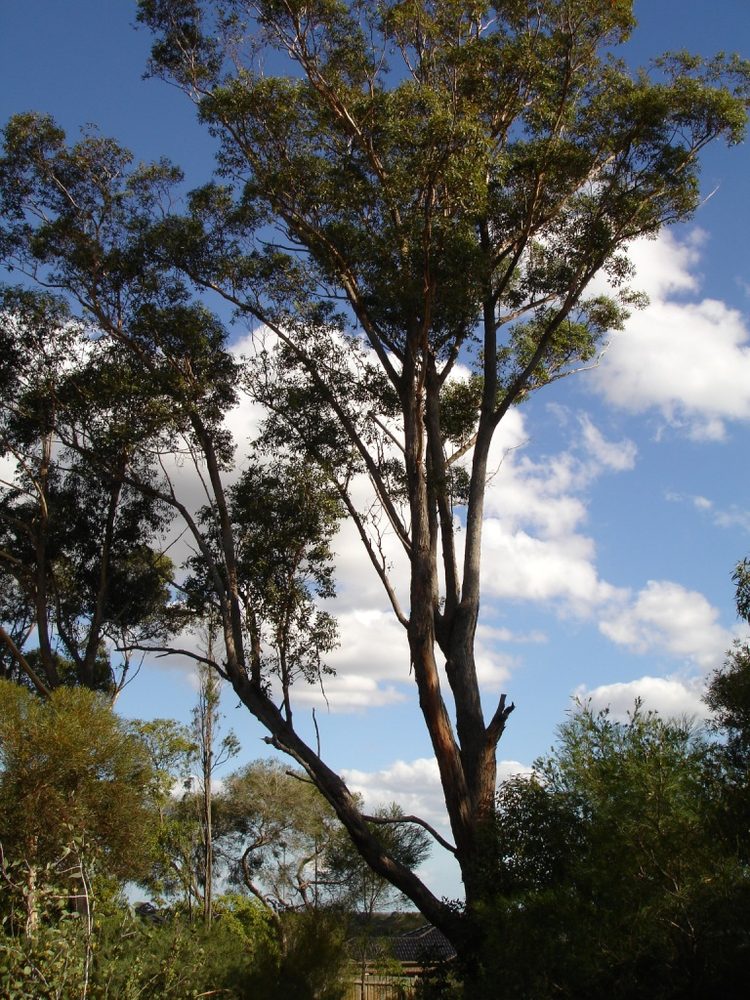
General Description
Reaching up to 40 metres (130 feet) high, it has rough bark on its trunk and branches. It is found on sandstone- or shale-based soils in open woodland, or on more sandy soils behind sand dunes. The white flowers appear in summer and autumn. It reproduces by resprouting from its woody lignotuber or epicormic buds after bushfire. E. botryoides hybridises with the Sydney blue gum (E. saligna) in the Sydney region. The hard, durable wood has been used for panelling and flooring.
Family Context
The Myrtaceae family is primarily tropical and subtropical. Notable medicinal members include:
- Guava — 57 documented uses
- Melaleuca leucadendron — 49 documented uses
- Clove — 45 documented uses
- Blue Gum — 44 documented uses
Geographic Distribution
Eucalyptus botryoides has been recorded in 10 countries and territories worldwide, including Australia, Brazil, Congo (DRC), China, Spain, and others.
Active Compounds
Phytochemical research has identified 30 compounds in this species, including a diverse array of phytochemical classes (see the Complete Chemical Inventory below for the full list).
The identified compounds include the following categories:
- Alkaloid: nitrogenous compounds with diverse pharmacological activities
Research Status
Although this species has documented phytochemical constituents, its ethnobotanical and clinical documentation remains incomplete. The limited documentation available for this species represents an opportunity for ethnobotanical research.