Botanical Overview
Erinacea anthyllis is a species in the Fabaceae family. The legume family (Fabaceae) includes trees, shrubs, and herbs that produce pods (legumes) and form nitrogen-fixing root nodules through symbiosis with bacteria. The flowers are typically pea-shaped with five petals. This large family provides food staples, timber, and numerous medicinal species. Phytochemical data for this species are limited at present.
General Description
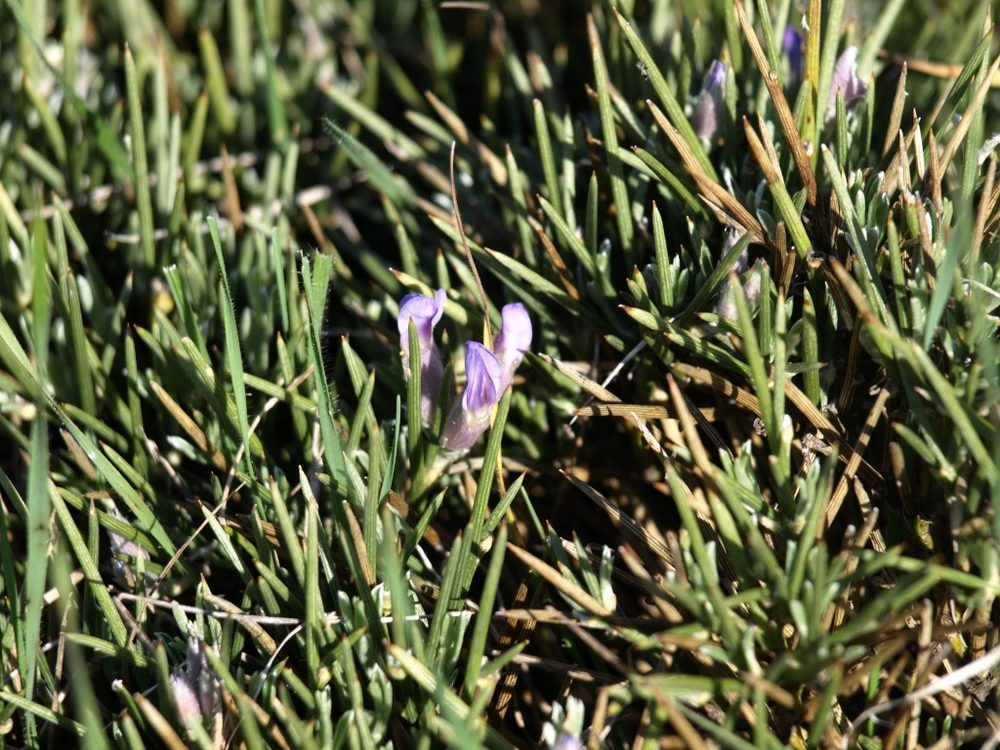
The sole species in genus Erinacea, it is native to stony mountainous places in the western Mediterranean, including the Pyrenees of France and Spain and Morocco, Algeria, and Tunisia. It is a dwarf, spiny, evergreen shrub growing to a dome shape 30 cm (12 in) tall and wide. It has dense foliage, and lilac coloured pea-like flowers in late spring and early summer.
Family Context
The Fabaceae family is large and globally distributed. Notable medicinal members include:
- Soybean — 76 documented uses
- Crab’s Eye — 73 documented uses
- Tamarind — 59 documented uses
- Common Indigo — 51 documented uses
Geographic Distribution
Erinacea anthyllis has been recorded in 10 countries and territories worldwide, including Canada, Switzerland, Algeria, Spain, France, and others.
Active Compounds
Phytochemical research has identified 2 compounds in this species: 5-0-methylgenistein, genistein.
Research Status
Although this species has documented phytochemical constituents, its ethnobotanical and clinical documentation remains incomplete. The limited documentation available for this species represents an opportunity for ethnobotanical research.