Botanical Overview
Enterolobium cyclocarpum belongs to the Fabaceae family. While not among the most extensively documented medicinal plants, this species has recorded uses that warrant attention from researchers and practitioners. The legume family (Fabaceae) includes trees, shrubs, and herbs that produce pods (legumes) and form nitrogen-fixing root nodules through symbiosis with bacteria. The flowers are typically pea-shaped with five petals. This large family provides food staples, timber, and numerous medicinal species.
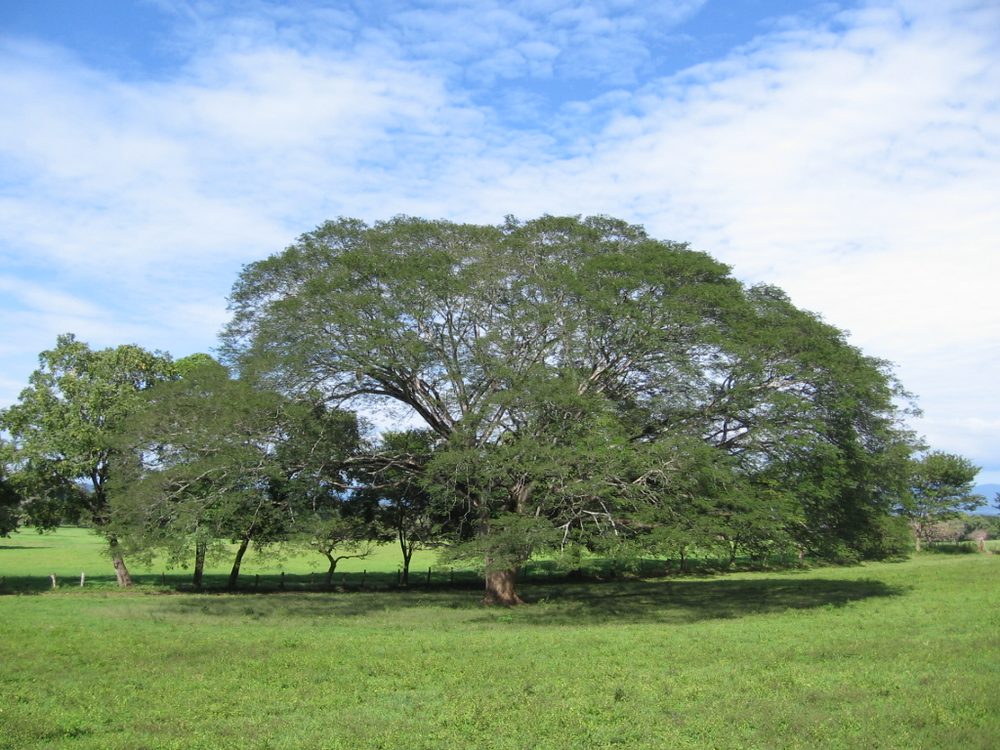
General Description
It is known for its large proportions, expansive, often spherical crown, and curiously shaped seedpods. The abundance of this tree, especially in Guanacaste Province, Costa Rica, where it is prized for the shady relief it provides from the intense sun, coupled with its immensity, have made it a widely recognized species. It is the national tree of Costa Rica. In North America, it is often called elephant-ear tree, due to the shape of the seedpods. Other common names include devil’s ear and earpod tree, parota, and orejón (Spanish) or huanacaxtle (Nahuatl). In El Salvador, it is known as conacaste. In the Yucatán Peninsula, it is known by the Mayan name, pich. In Panama, it is known as a corotú.
Family Context
The Fabaceae family is large and globally distributed. Notable medicinal members include:
- Soybean — 76 documented uses
- Crab’s Eye — 73 documented uses
- Tamarind — 59 documented uses
- Common Indigo — 51 documented uses
Geographic Distribution
Enterolobium cyclocarpum has been recorded in 10 countries and territories worldwide, including Brazil, Belize, Colombia, Costa Rica, Mexico, and others.
Traditional Uses
Enterolobium cyclocarpum has been traditionally used for respiratory conditions and immune system support.
Respiratory conditions.
- Cold
- Bronchitis
Respiratory conditions are addressed through steam inhalation of the herb’s vapors or internal use as a warm tea. The hot infusion acts as an expectorant, helping to loosen phlegm and clear congestion. Some traditions combine it with honey for coughs.
Immune system support.
- Tumor
Immune support involves taking the herb as a decoction or tincture over extended periods. The active compounds stimulate immune cell activity and provide antimicrobial protection.
Active Compounds
Phytochemical research has identified 1 compound in this species: betulinic-acid.