Botanical Overview
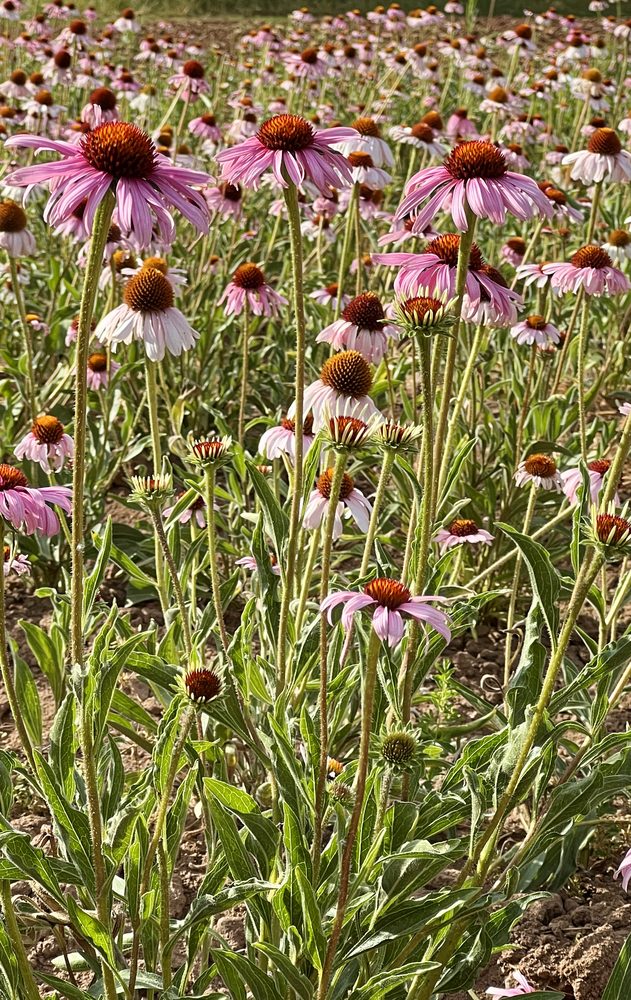
Echinacea (Echinacea purpurea) belongs to the Asteraceae family. Limited but reliable traditional records indicate this plant has recognized medicinal applications in one or more healing traditions. The daisy family (Asteraceae) is one of the largest plant families, characterized by composite flower heads (capitula) that contain many small florets surrounded by bracts. Plants range from tiny alpine herbs to large tropical trees. The family includes many medicinally important species with bitter compounds and essential oils.
General Description
It is native to parts of eastern North America and present to some extent in the wild in much of the eastern, southeastern and midwestern United States, as well as in the Canadian Province of Ontario. It is most common in the Ozarks, the Mississippi Valley, and the Ohio Valley. Its habitats include dry open woods, prairies, and barrens.
Family Context
The Asteraceae family is extremely large and diverse. Notable medicinal members include:
- Yarrow — 63 documented uses
- Gobo — 63 documented uses
- Mugwort — 55 documented uses
- Sunflower — 52 documented uses
Geographic Distribution
Echinacea has been recorded in 10 countries and territories worldwide, including Austria, Belgium, Canada, Germany, France, and others.
Traditional Uses
Echinacea has been traditionally used for skin and wound care, reproductive health, and metabolic and nutritional health.
Skin and wound care.
- Skin
For skin conditions, the fresh or dried plant is applied topically as a poultice, wash, or compress. A strong decoction can be used to clean wounds and sores. The antimicrobial properties help prevent infection while promoting tissue repair.
Reproductive health.
- Syphilis
In traditional contexts, reproductive health applications typically involve internal preparations such as teas or decoctions. The herb may be taken at specific times during the menstrual cycle.
Metabolic and nutritional health.
- Depurative
Metabolic applications include consuming the plant as a food, fresh juice, or herbal infusion. Regular use supports the body’s natural metabolic processes and nutritional status.
Active Compounds
Phytochemical research has identified 30 compounds in this species, including a diverse array of phytochemical classes (see the Complete Chemical Inventory below for the full list).
The identified compounds include the following categories:
- Flavonoid: antioxidant compounds that protect cells from oxidative damage
- Sterol: cholesterol-like compounds with anti-inflammatory properties
- Alkaloid: nitrogenous compounds with diverse pharmacological activities