Botanical Overview
False Strawberry (Duchesnea indica) belongs to the Rosaceae family. While not among the most extensively documented medicinal plants, this species has recorded uses that warrant attention from researchers and practitioners. The rose family (Rosaceae) includes trees, shrubs, and herbs with five-petaled flowers and numerous stamens. Many species produce edible fruits such as apples, pears, cherries, and berries. The family includes both ornamental roses and many species with astringent and medicinal properties.
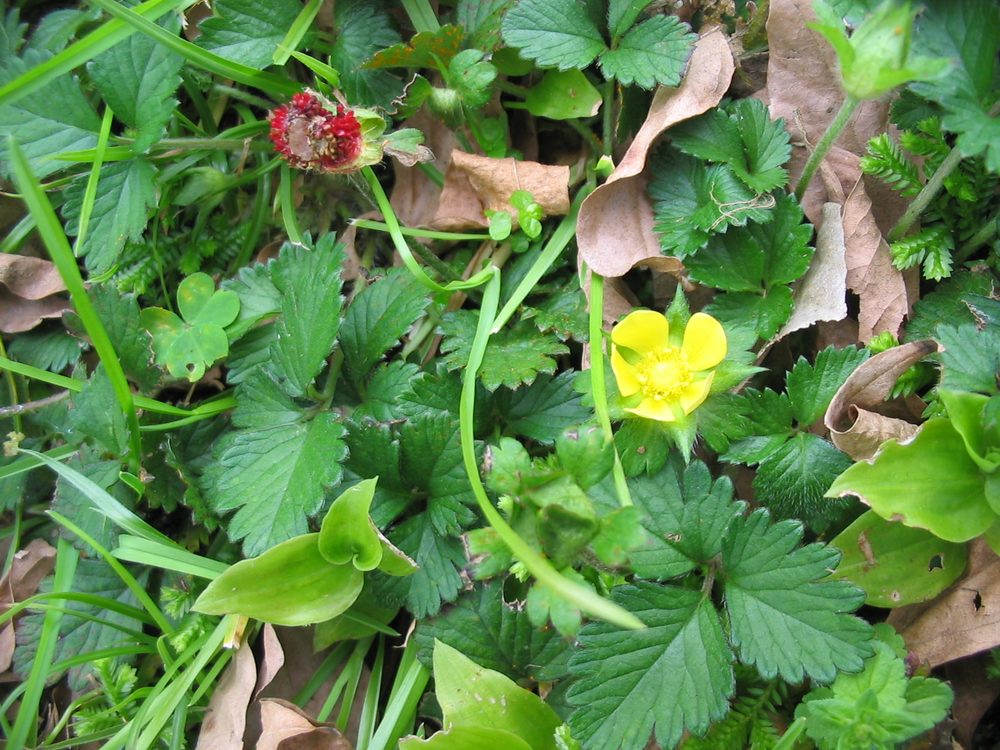
General Description
It has ternate foliage and an aggregate accessory fruit, similar to true strawberries of the genus Fragaria. Unlike the white or slightly pink flowers of true strawberries, Potentilla indica has yellow flowers, as do many other Potentilla species. It is native to eastern and southern Asia, but has naturalized in many regions worldwide. They are considered to be an invasive species and weed by some.
Family Context
The Rosaceae family is widely distributed in temperate regions. Notable medicinal members include:
- Peach — 51 documented uses
- Apricot — 37 documented uses
- Almond — 34 documented uses
- Greater Burnet — 29 documented uses
Traditional Uses
False Strawberry has been traditionally used for skin and wound care, pain and inflammation, and metabolic and nutritional health.
Skin and wound care.
- Abscess
- Eczema
- Ringworm
- Boil
For skin conditions, the fresh or dried plant is applied topically as a poultice, wash, or compress. A strong decoction can be used to clean wounds and sores. The antimicrobial properties help prevent infection while promoting tissue repair.
Pain and inflammation.
- Swelling
For pain and inflammation, preparations are applied both topically as compresses and taken internally. A warm poultice draws blood to the area and promotes healing, while internal preparations address systemic inflammation.
Metabolic and nutritional health.
- Refrigerant
Metabolic applications include consuming the plant as a food, fresh juice, or herbal infusion. Regular use supports the body’s natural metabolic processes and nutritional status.
Active Compounds
Phytochemical research has identified 18 compounds in this species, including a diverse array of phytochemical classes (see the Complete Chemical Inventory below for the full list).
The identified compounds include the following categories:
- Sterol: cholesterol-like compounds with anti-inflammatory properties