Botanical Overview
Dipterocarpus zeylanicus is a species in the Dipterocarpaceae family. The dipterocarp family (Dipterocarpaceae) includes large tropical trees with simple, alternate leaves and prominent stipules. The fruits are nuts with two or more enlarged wing-like sepals that aid in wind dispersal. These trees dominate many Southeast Asian rainforest canopies and produce valuable timber and resins. Phytochemical data for this species are limited at present.
General Description
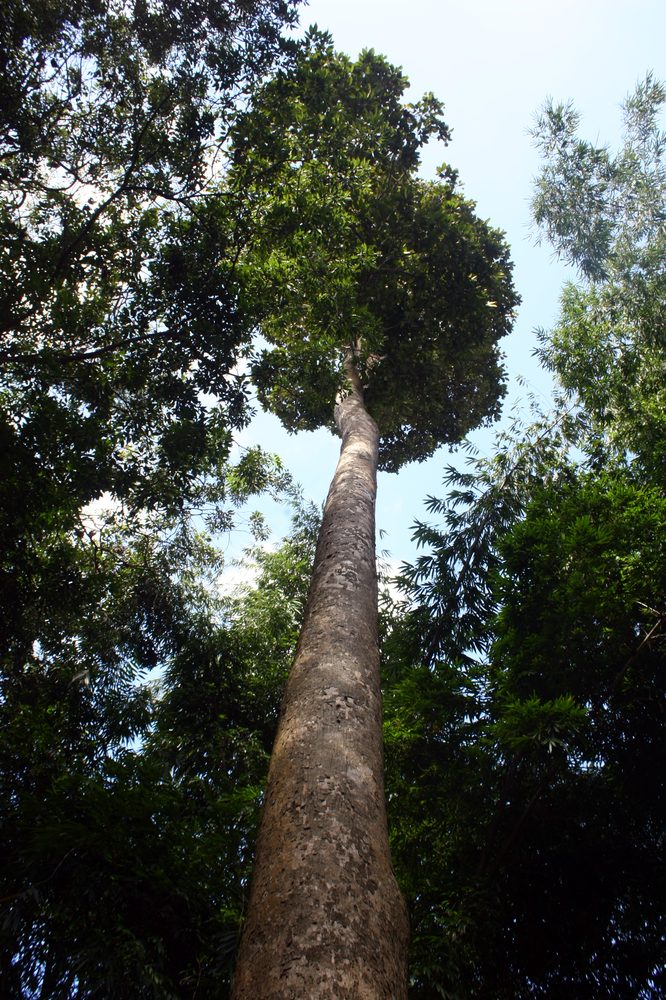
A closely related Indian species is Dipterocarpus turbinatus. The Sri Lankan tree is a large tree that grows up to 40–45 m (131–148 ft) tall and 4–6 m (13–20 ft) in circumference. The bark is light pinkish brown or light yellowish brown. Leaves are big and oval, 5 to 8 inches (13 to 20 cm) long. The sharp-edged leaves are covered with silver hairs. Flowers bloom in April and seeds have two wings to spread from wind. The bark contains considerable amounts of gray colour oleoresin. D. zeylanicus can be found in moist low country like Ratnapura, Kaluthara, Galle and Matara Districts and also in the Sinharaja rain forest. The tallest (nearly 60 m (200 ft)) trees of Hora in Sri Lanka are found in Udakiruwa village in Lunugala and under great threat of legal/illegal felling. There are many place names which begin with the name of the Hora tree. Even Tamil place names like Norochcholai (where a controversial coal power plant in Sri Lanka is located) is said to refer to a clump of Hora trees - i. e. , “Horagolla” in Sinhalese. It is used as a strong and hard wood and a weight of 54 lb/cu ft (0. 86 g/cm3). The heartwood is light pinkish to dark reddish brown. After a preservative treatment, it is used for railway sleepers, rafters, electric posts, beams, joists, heavy types of carpentry work, and eminently suitable for underwater work. In Theravada Buddhism, the tree is said to have played the role of the Bodhi tree for a Buddha of a previous epoch, viz. , the thirteenth Buddha known as “Padumuththara - පදුමුත්තර”.
Geographic Distribution
Dipterocarpus zeylanicus has been recorded in Sri Lanka, French Polynesia, United States, and ZZ.
Active Compounds
Phytochemical research has identified 2 compounds in this species: betulin, betulinic-acid.
Research Status
Although this species has documented phytochemical constituents, its ethnobotanical and clinical documentation remains incomplete. The limited documentation available for this species represents an opportunity for ethnobotanical research.