Botanical Overview
Dipsacus fullonum belongs to the Dipsacaceae family. While not among the most extensively documented medicinal plants, this species has recorded uses that warrant attention from researchers and practitioners. This species belongs to the Dipsacaceae family, a group of flowering plants.
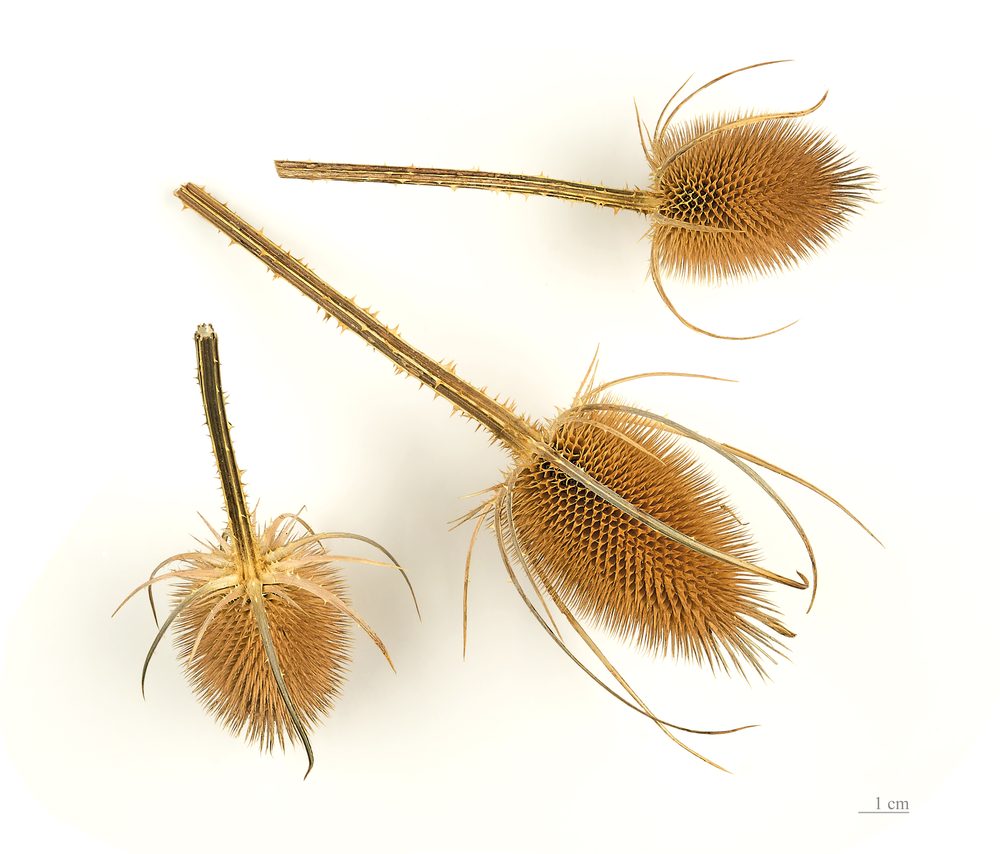
General Description
Dipsacus sylvestris, is a species of flowering plant known by the common names wild teasel or fuller’s teasel, although the latter name is usually applied to the cultivated variety D. fullonum var. sativus. It is native to Eurasia and North Africa, but it is known in the Americas, southern Africa, Australia and New Zealand as an introduced species. It is a herbaceous biennial plant (rarely a short-lived perennial plant) growing to 1–2. 5 metres (3. 3–8. 2 ft) tall. The inflorescence is a cylindrical array of lavender flowers which dries to a cone of spine-tipped hard bracts. It may be 10 centimetres (3. 9 in) long. The dried inflorescence of a cultivar was historically used in textile manufacturing as a tool for fulling.
Traditional Uses
Dipsacus fullonum has been traditionally used for urinary tract health and metabolic and nutritional health.
Urinary tract health.
- Diuretic
Urinary tract applications typically involve drinking the herb as a mild tea, which increases urine production and helps flush the urinary system. It may be combined with other demulcent herbs to soothe irritated tissues.
Metabolic and nutritional health.
- Sudorific
Metabolic applications include consuming the plant as a food, fresh juice, or herbal infusion. Regular use supports the body’s natural metabolic processes and nutritional status.
Active Compounds
Phytochemical research has identified 24 compounds in this species, including a diverse array of phytochemical classes (see the Complete Chemical Inventory below for the full list).
The identified compounds include the following categories:
- Flavonoid: antioxidant compounds that protect cells from oxidative damage
- Tannin: astringent compounds that tighten tissues and resist infection
- Saponin: soap-like compounds with immune-modulating activity