Botanical Overview
Diospyros buxifolia is a species in the Ebenaceae family. The ebony family (Ebenaceae) includes trees and shrubs with hard, dense wood and alternate leaves. The plants are dioecious (male and female flowers on separate plants) and produce berry-like fruits. Several species are valued for their dark heartwood used in woodworking. Phytochemical data for this species are limited at present.
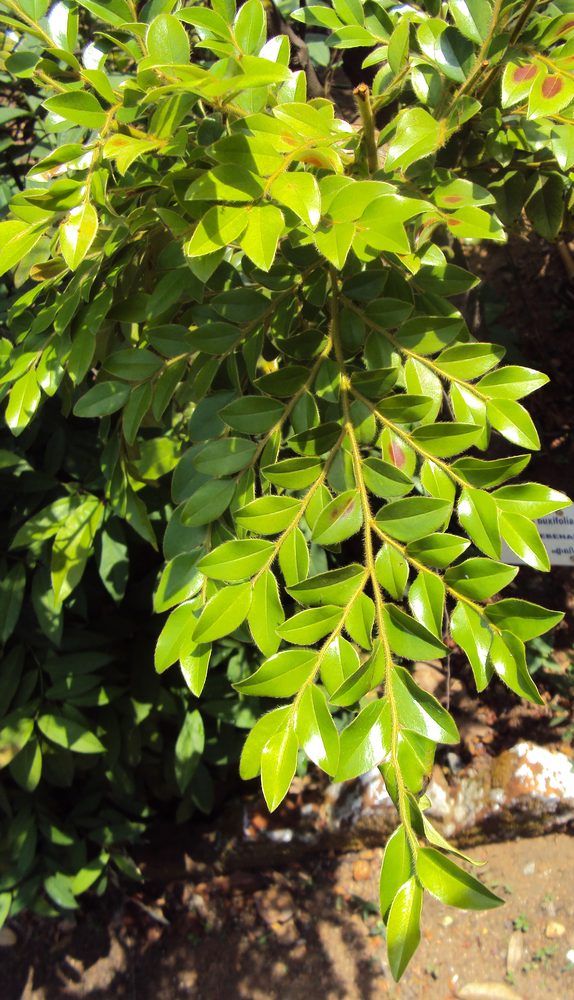
General Description
It grows up to 30 metres (100 ft) tall. Inflorescences bear up to five flowers. The fruits are ellipsoid, up to 1. 6 cm (1 in) long. The specific epithet buxifolia is from the Latin, referring to the leaves’ resemblance to those of the genus Buxus. Habitat is forests from sea level to 1,000 metres (3,300 ft) altitude. D. buxifolia is found widely from India to Indochina and in Malesia as far as New Guinea.
Family Context
The Ebenaceae family is primarily tropical. Notable medicinal members include:
- Diospyros tomentosa — 29 documented uses
- Persimmon — 24 documented uses
- American Persimmon — 19 documented uses
- Diospyros melanoxylon — 15 documented uses
Geographic Distribution
Diospyros buxifolia has been recorded in 10 countries and territories worldwide, including Indonesia, India, Sri Lanka, Malaysia, Papua New Guinea, and others.
Active Compounds
Phytochemical research has identified 2 compounds in this species: betulin, betulinic-acid.
Research Status
Although this species has documented phytochemical constituents, its ethnobotanical and clinical documentation remains incomplete. Further ethnobotanical and pharmacological research may reveal additional therapeutic applications for this species.