Botanical Overview
Greater Yam (Dioscorea alata) belongs to the Dioscoreaceae family. Limited but reliable traditional records indicate this plant has recognized medicinal applications in one or more healing traditions. This species belongs to the Dioscoreaceae family, a group of flowering plants.
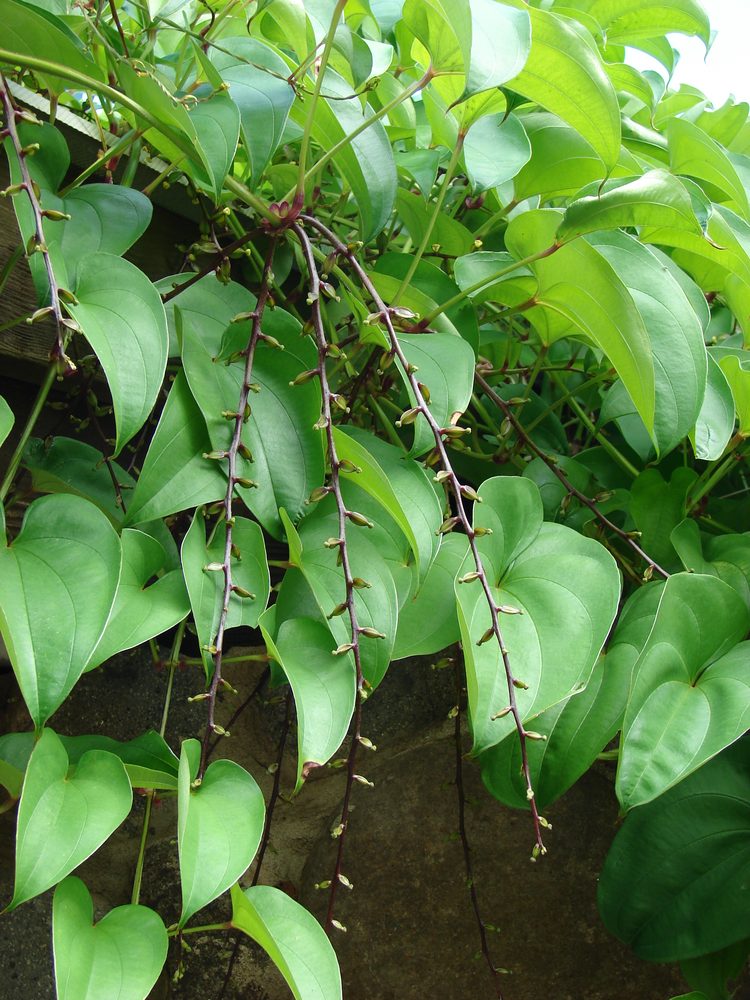
General Description
The tubers are usually a vivid violet-purple to bright lavender (hence the common name), but some range from creamy-white to plain white. Although it is sometimes confused with taro and the Okinawa sweet potato beniimo (紅芋) (Ipomoea batatas ‘Ayamurasaki’), D. alata is also grown in Okinawa. Its origins are in the Asian and Oceanian tropics. Some varieties attain great size. A “Mambatap” greater yam grown in Maprik, East Sepik District, Papua New Guinea around 1939 was 3. 5 m (11 ft) in length.
Family Context
The Dioscoreaceae family is widely distributed. Notable medicinal members include:
- Air Potato — 17 documented uses
- Wild Yam — 16 documented uses
- Mountain Yam — 5 documented uses
- Barbasco — 1 documented uses
Geographic Distribution
Greater Yam has been recorded in 10 countries and territories worldwide, including Benin, Ivory Coast, China, Ghana, Sri Lanka, and others.
Traditional Uses
Greater Yam has been traditionally used for digestive health, skin and wound care, and fever management, among other applications.
Digestive health.
- Laxative
- Vermifuge
For digestive complaints, the herb is typically prepared as a tea or decoction taken before meals. The bitter compounds stimulate digestive secretions and improve nutrient absorption. Some traditions use the powdered root or leaves in small doses as a stomachic tonic.
Skin and wound care.
- Leprosy
For skin conditions, the fresh or dried plant is applied topically as a poultice, wash, or compress. A strong decoction can be used to clean wounds and sores. The antimicrobial properties help prevent infection while promoting tissue repair.
Fever management.
- Fever
Febrifuge preparations are typically administered as hot teas to induce perspiration, which helps the body regulate temperature. The patient is kept warm and encouraged to rest while the herb promotes sweating.
Active Compounds
Phytochemical research has identified 30 compounds in this species, including a diverse array of phytochemical classes (see the Complete Chemical Inventory below for the full list).
The identified compounds include the following categories:
- Flavonoid: antioxidant compounds that protect cells from oxidative damage
- Alkaloid: nitrogenous compounds with diverse pharmacological activities