Botanical Overview
Venus’ Fly Trap (Dionaea muscipula) is a species in the Droseraceae family. This species belongs to the Droseraceae family, a group of flowering plants. Phytochemical data for this species are limited at present.
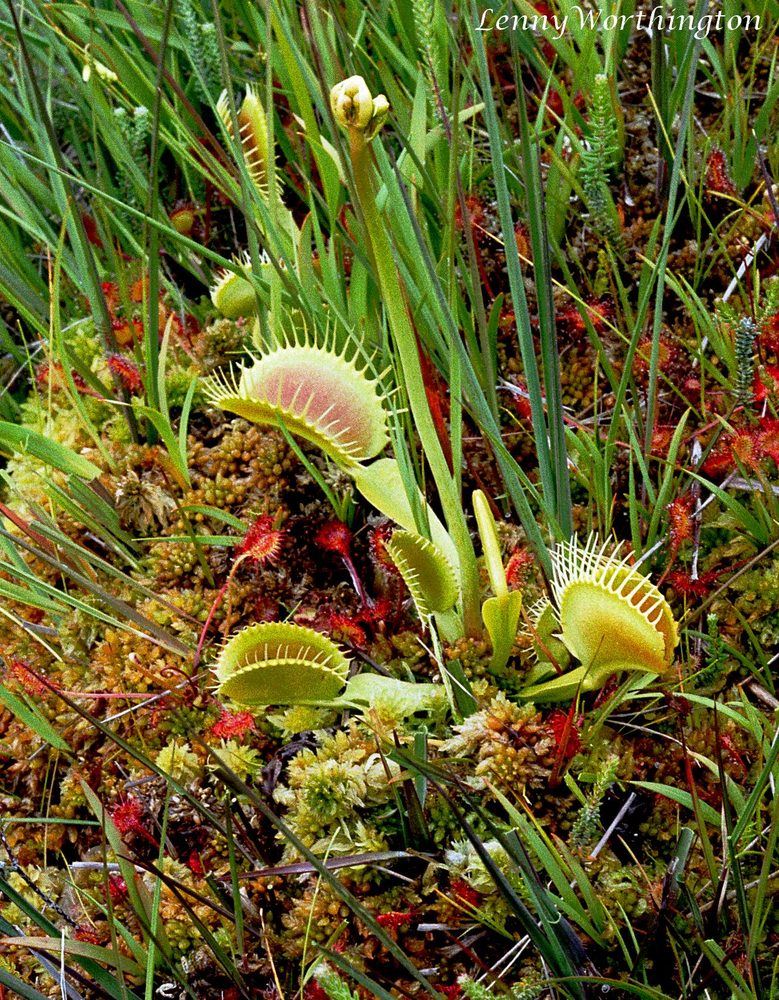
General Description
Although various modern hybrids have been created in cultivation, D. muscipula is the only species of the monotypic genus Dionaea. It is closely related to the waterwheel plant and the cosmopolitan sundews (Drosera), all of which belong to the family Droseraceae. Dionaea catches its prey—chiefly insects and arachnids—with a “jaw”-like clamping structure, which is formed by the terminal portion of each of the plant’s leaves; when an insect makes contact with the open leaves, vibrations from the prey’s movements ultimately trigger the “jaws” to shut via tiny hairs on their inner surfaces. Additionally, when an insect or spider touches one of these hairs, the trap prepares to close, only fully enclosing the prey if a second hair is contacted within (approximately) twenty seconds of the first contact. Triggers may occur as quickly as 1⁄10 of a second from initial contact.
Geographic Distribution
Venus’ Fly Trap has been recorded in 10 countries and territories worldwide, including Australia, Belgium, Germany, Japan, South Korea, and others.
Active Compounds
Phytochemical research has identified 4 compounds in this species, including a diverse array of phytochemical classes (see the Complete Chemical Inventory below for the full list).
The identified compounds include the following categories:
- Flavonoid: antioxidant compounds that protect cells from oxidative damage
Research Status
Although this species has documented phytochemical constituents, its ethnobotanical and clinical documentation remains incomplete. Additional phytochemical investigation could identify novel bioactive compounds in this plant.