Botanical Overview
Dillenia scabrella belongs to the Dilleniaceae family. While not among the most extensively documented medicinal plants, this species has recorded uses that warrant attention from researchers and practitioners. The dillenia family (Dilleniaceae) includes trees, shrubs, and climbers with simple, alternate leaves with prominent parallel veins. The flowers are showy with five petals and numerous stamens. Species in this family are primarily tropical and produce fruits with fleshy calyces.
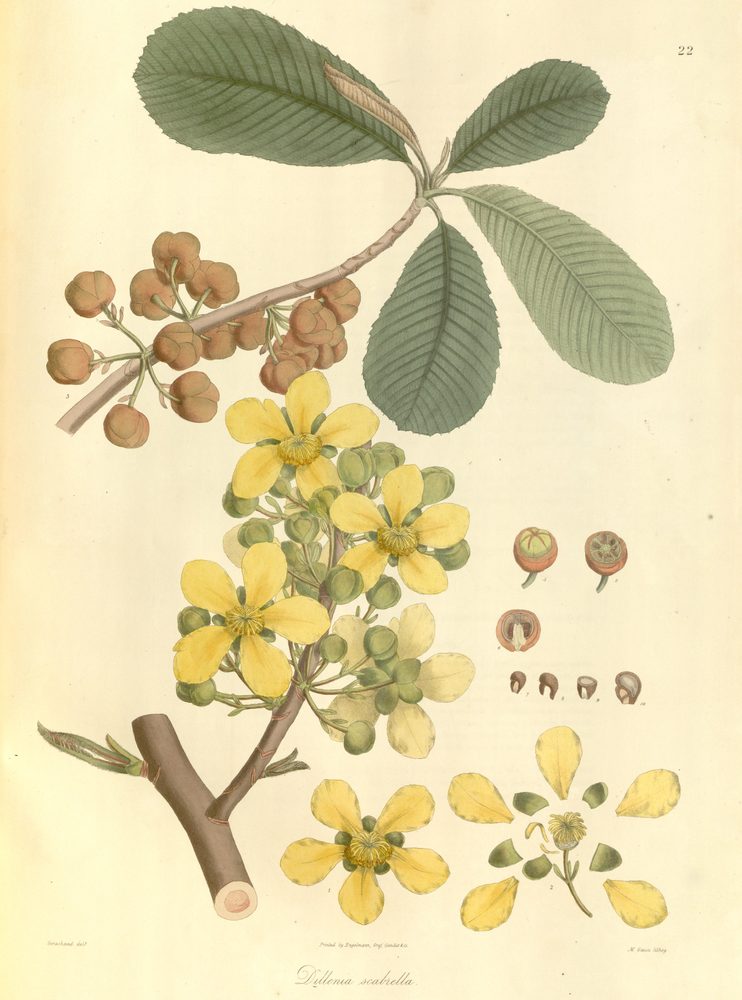
General Description
This species has been recorded from: Bangladesh, Cambodia, Laos, Myanmar, Thailand and Vietnam (where they are called sổ nhám).
Family Context
The Dilleniaceae family is primarily tropical. Notable medicinal members include:
- Dillenia indica — 9 documented uses
- Tetracera scandens — 9 documented uses
- Dillenia pentagyna — 7 documented uses
- Curatella americana — 6 documented uses
Geographic Distribution
Dillenia scabrella has been recorded in 6 countries and territories worldwide, including Indonesia, India, Cambodia, Laos, Nepal, and others.
Traditional Uses
Dillenia scabrella has been traditionally used for skin and wound care.
Skin and wound care.
- Sore
For skin conditions, the fresh or dried plant is applied topically as a poultice, wash, or compress. A strong decoction can be used to clean wounds and sores. The antimicrobial properties help prevent infection while promoting tissue repair.
Active Compounds
Phytochemical research has identified 2 compounds in this species: betulin, betulinic-acid.