Botanical Overview
Dianthus superbus is a flowering plant in the Caryophyllaceae family. This plant has earned a place in traditional medicine through its consistent therapeutic benefits, recorded across multiple cultures. This species belongs to the Caryophyllaceae family, a group of flowering plants.
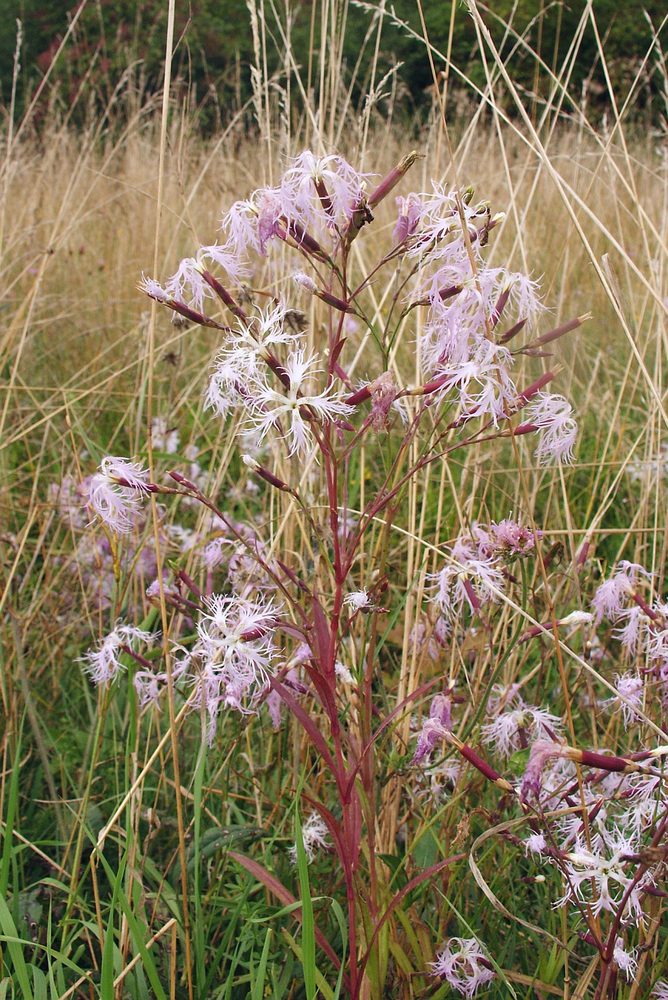
General Description
It is a herbaceous perennial plant growing to 80 cm tall. The leaves are green to greyish green, slender, up to 8 cm long. The flowers are sweetly scented, 3–5 cm in diameter, with five deeply cut fringed petals, pink to lavender with a greenish base; they are produced in branched clusters at the top of the stems from early to late summer. There are six subspecies: Dianthus superbus subsp. superbus. Most of the species’ range. Dianthus superbus subsp. autumnalis Oberd. Southwestern France. Dianthus superbus subsp. sylvestris Čelak. Germany. Dianthus superbus subsp. alpestris Kablík. ex Čelak. (syn. D. s. subsp. speciosus). Alps, Carpathians, at high altitudes. Shorter stems; leaves greyer; flowers large. Dianthus superbus subsp. stenocalyx (Trautv. ex Juz. ) Kleopow. Southern Russia, Ukraine. Dianthus superbus subsp. longicalycinus (Maxim. ) Kitam. Japan. Also called nadeshiko (ナデシコ). It is the only food source of the large moth Coleophora musculella.
Family Context
The Caryophyllaceae family is widely distributed. Notable medicinal members include:
- Chickweed — 20 documented uses
- Corn Cockle — 8 documented uses
- Gypsophila struthium — 7 documented uses
- Carnation — 6 documented uses
Geographic Distribution
Dianthus superbus has been recorded in 10 countries and territories worldwide, including Austria, Switzerland, China, Germany, Estonia, and others.
Traditional Uses
Dianthus superbus has been traditionally used for skin and wound care, urinary tract health, and fever management, among other applications.
Skin and wound care.
- Abscess
For skin conditions, the fresh or dried plant is applied topically as a poultice, wash, or compress. A strong decoction can be used to clean wounds and sores. The antimicrobial properties help prevent infection while promoting tissue repair.
Urinary tract health.
- Diuretic
- Edema
- Gravel
Urinary tract applications typically involve drinking the herb as a mild tea, which increases urine production and helps flush the urinary system. It may be combined with other demulcent herbs to soothe irritated tissues.
Fever management.
- Fever
Febrifuge preparations are typically administered as hot teas to induce perspiration, which helps the body regulate temperature. The patient is kept warm and encouraged to rest while the herb promotes sweating.
Active Compounds
Phytochemical research has identified 1 compound in this species: dianoside-a.
The identified compounds include the following categories:
- Flavonoid: antioxidant compounds that protect cells from oxidative damage