Botanical Overview
Derris trifoliata belongs to the Fabaceae family. Limited but reliable traditional records indicate this plant has recognized medicinal applications in one or more healing traditions. The legume family (Fabaceae) includes trees, shrubs, and herbs that produce pods (legumes) and form nitrogen-fixing root nodules through symbiosis with bacteria. The flowers are typically pea-shaped with five petals. This large family provides food staples, timber, and numerous medicinal species.
General Description
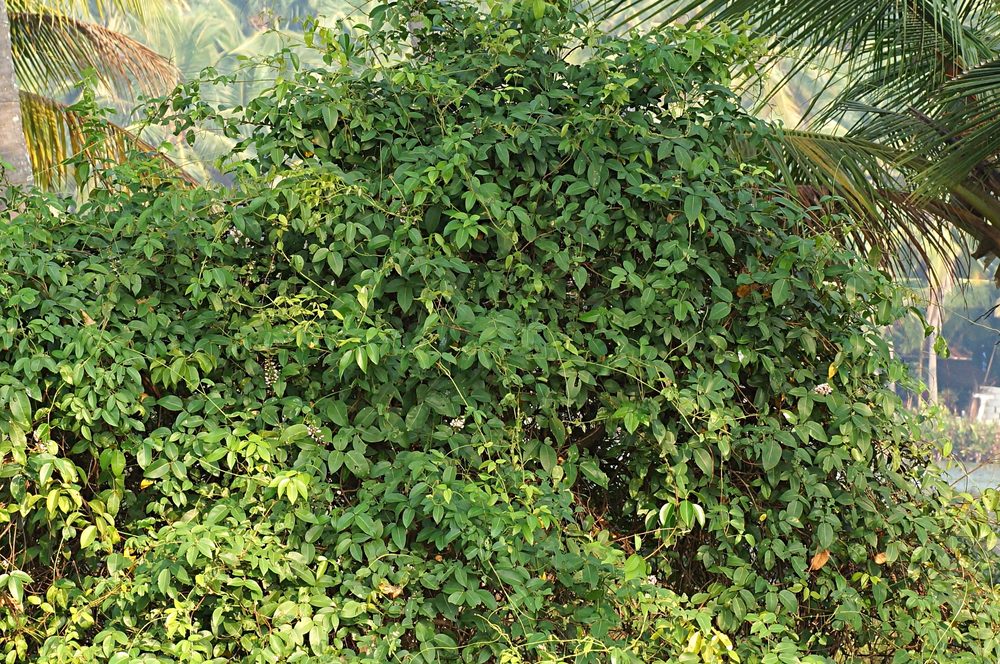
It is common in India; in various Indian languages, it is known as Angaar valli in Sanskrit; Karanjvel in Marathi; Firta in Konkani; Tigekranugu, Nauatige, and Chirathelathige in Telugu; Ketia and Swanlata in Oria; Kammattivalli and Ponumvalli in Malayalam; Kaliya lata/Kalilata and Panlata in Bengali; Panlata also in Hindi. It is also common in various parts of South East Asia; common names include Asiasimanan in Filipino Tagalog; Tuwa areuy in Indonesian Sundanese; Akar Ketuil, Ketui, Setui, Salang, Tuba bekut or Sea Tuba in Peninsular Malaysian; Phak thaep in central Thai; Cc Kn Nc/Cosc Kesn Nuwowsc in Vietnamese, etc. It is a large climber found commonly in coastal swamps of tropical coastal areas in South-East Asia. It is 3–5 meters long. Its leaves are alternate, pinnate, 12–20 cm; leaflets 5 and ovate, 6-10 cm, acuminate, rounded at base. Flowers are 1 cm in size, in axillary racemes 8–15 cm. Pods are 3–4 cm, flat, pale yellow in color. The rotenoid 6aα,12aα-12a-hydroxyelliptone can be found in the stems of D. trifoliata. In 1902 Kazuo Nagai, Japanese chemical engineer of the Government-General of Taiwan, isolated a pure crystalline compound from a closely related plant possibly Derris elliptica which he called rotenone, after the Taiwanese name of the plant 蘆藤 (Min Nan Chinese: lôo-tîn) translated into Japanese rōten (ローテン). The pod, root, and stem of the Derris trifoliata are rich in poisonous rotenoids and used commonly in insecticide, piscicide and pesticide activities and also have sometimes caused human morbidity or mortality due to suicide attempts or accidental ingestion. The larvae of Hasora hurama feed on D. trifoliata.
Family Context
The Fabaceae family is large and globally distributed. Notable medicinal members include:
- Soybean — 76 documented uses
- Crab’s Eye — 73 documented uses
- Tamarind — 59 documented uses
- Common Indigo — 51 documented uses
Geographic Distribution
Derris trifoliata has been recorded in 10 countries and territories worldwide, including Australia, China, Indonesia, India, Japan, and others.
Traditional Uses
Derris trifoliata has been traditionally used for digestive health, pain and inflammation, and nervous system disorders.
Digestive health.
- Dyspepsia
For digestive complaints, the herb is typically prepared as a tea or decoction taken before meals. The bitter compounds stimulate digestive secretions and improve nutrient absorption. Some traditions use the powdered root or leaves in small doses as a stomachic tonic.
Pain and inflammation.
- Rheumatism
For pain and inflammation, preparations are applied both topically as compresses and taken internally. A warm poultice draws blood to the area and promotes healing, while internal preparations address systemic inflammation.
Nervous system disorders.
- Spasm
Nervous system support involves taking the herb as a warm tea, often in the evening or before bed. The calming compounds interact with neurotransmitter systems to promote relaxation and restful sleep.
Active Compounds
Phytochemical research has identified 1 compound in this species: betulin.