Botanical Overview
Dragon’s Blood (Daemonorops draco) belongs to the Arecaceae family. While not among the most extensively documented medicinal plants, this species has recorded uses that warrant attention from researchers and practitioners. The palm family (Arecaceae) includes trees, shrubs, and climbers with unbranched stems topped by a crown of large, compound, evergreen leaves. The flowers are small and clustered on branched inflorescences, and the fruits are typically drupes. Palms provide oils, waxes, and other useful products.
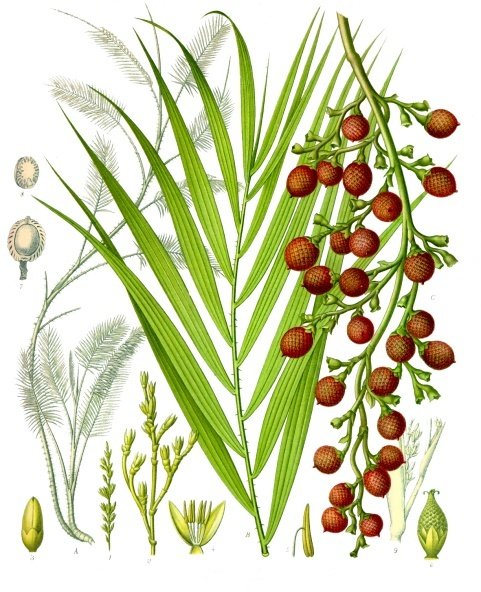
General Description
It is a source of the red resin known as dragon’s blood, which is a pigment with medicinal uses. The compound 4’-demethyl-3,9-dihydroeucomine (DMDHE), derived from the resin of Daemonorops draco, the homotypic synonym for Calamus draco, is a natural bitter-masking substance. This compound, which masks the bitter taste, suggests the importance for the food, beverage, and pharmaceutical industries to improve the taste and acceptability of foods and medicines.
Family Context
The Arecaceae family is primarily tropical and subtropical. Notable medicinal members include:
- Coconut — 93 documented uses
- Betel Nut — 52 documented uses
- Date Palm — 42 documented uses
- African Oil Palm — 10 documented uses
Geographic Distribution
Dragon’s Blood has been recorded in 6 countries and territories worldwide, including China, Indonesia, India, Singapore, United States, and others.
Traditional Uses
Dragon’s Blood has been traditionally used for digestive health, skin and wound care, and immune system support.
Digestive health.
- Diarrhea
- Dysentery
For digestive complaints, the herb is typically prepared as a tea or decoction taken before meals. The bitter compounds stimulate digestive secretions and improve nutrient absorption. Some traditions use the powdered root or leaves in small doses as a stomachic tonic.
Skin and wound care.
- Sore
For skin conditions, the fresh or dried plant is applied topically as a poultice, wash, or compress. A strong decoction can be used to clean wounds and sores. The antimicrobial properties help prevent infection while promoting tissue repair.
Immune system support.
- Cancer
Immune support involves taking the herb as a decoction or tincture over extended periods. The active compounds stimulate immune cell activity and provide antimicrobial protection.
Active Compounds
Phytochemical research has identified 27 compounds in this species, including a diverse array of phytochemical classes (see the Complete Chemical Inventory below for the full list).