Botanical Overview
Scotch Broom (Cytisus scoparius) is a flowering plant in the Fabaceae family. This plant has earned a place in traditional medicine through its consistent therapeutic benefits, recorded across multiple cultures. The legume family (Fabaceae) includes trees, shrubs, and herbs that produce pods (legumes) and form nitrogen-fixing root nodules through symbiosis with bacteria. The flowers are typically pea-shaped with five petals. This large family provides food staples, timber, and numerous medicinal species.
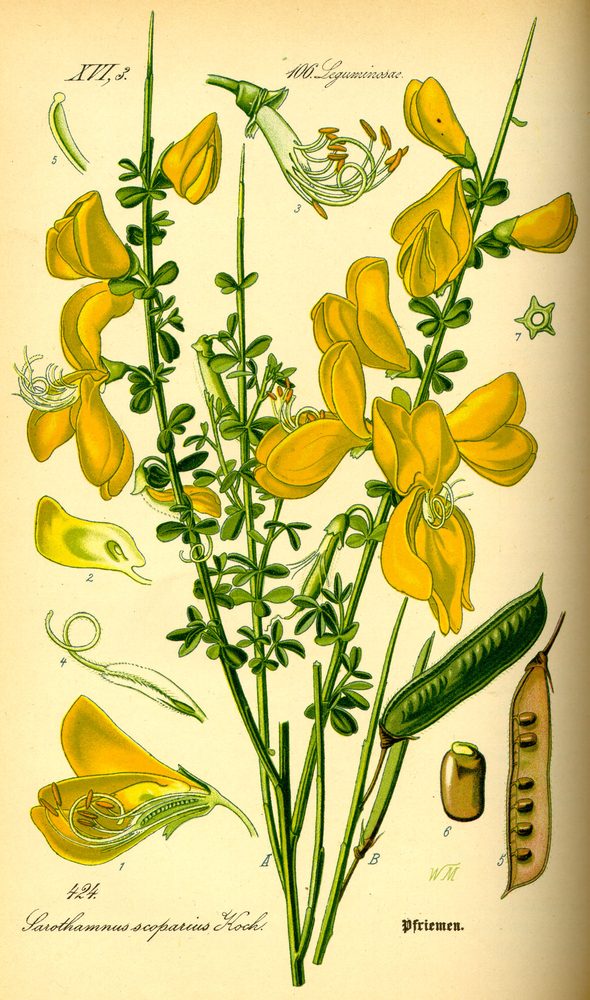
General Description
Sarothamnus scoparius), the common broom or Scotch broom, is a deciduous leguminous shrub native to western and central Europe. In Great Britain and Ireland, the standard name is broom; this name is also used for other members of the Genisteae tribe, such as French broom or Spanish broom; and the term common broom is sometimes used for clarification. In other English-speaking countries, the most common name is “Scotch broom” (or Scots broom); however, it is known as English broom in Australia. Though this plant is native to Europe, it has spread to many other parts of the world with human introduction. Scotch broom is now common in certain areas of North America and South America, and is considered an invasive species. In North America, Scotch broom was frequently planted in gardens, and was later used for erosion control along highway cuts and fills. Scotch broom is slightly toxic and unpalatable to livestock, and its seeds are viable for up to ten years, allowing them to regrow many years later, after extermination of the plant.
Family Context
The Fabaceae family is large and globally distributed. Notable medicinal members include:
- Soybean — 76 documented uses
- Crab’s Eye — 73 documented uses
- Tamarind — 59 documented uses
- Common Indigo — 51 documented uses
Geographic Distribution
Scotch Broom has been recorded in 10 countries and territories worldwide, including Australia, Belgium, Canada, Germany, Denmark, and others.
Traditional Uses
Scotch Broom has been traditionally used for digestive health, respiratory conditions, and urinary tract health, among other applications.
Digestive health.
- Purgative
For digestive complaints, the herb is typically prepared as a tea or decoction taken before meals. The bitter compounds stimulate digestive secretions and improve nutrient absorption. Some traditions use the powdered root or leaves in small doses as a stomachic tonic.
Respiratory conditions.
- Cough
- Cold
Respiratory conditions are addressed through steam inhalation of the herb’s vapors or internal use as a warm tea. The hot infusion acts as an expectorant, helping to loosen phlegm and clear congestion. Some traditions combine it with honey for coughs.
Urinary tract health.
- Diuretic
Urinary tract applications typically involve drinking the herb as a mild tea, which increases urine production and helps flush the urinary system. It may be combined with other demulcent herbs to soothe irritated tissues.
Active Compounds
Phytochemical research has identified 30 compounds in this species, including a diverse array of phytochemical classes (see the Complete Chemical Inventory below for the full list).
The identified compounds include the following categories:
- Flavonoid: antioxidant compounds that protect cells from oxidative damage
- Sterol: cholesterol-like compounds with anti-inflammatory properties
- Alkaloid: nitrogenous compounds with diverse pharmacological activities