Botanical Overview
Pumpkin (Cucurbita maxima) is a flowering plant in the Cucurbitaceae family. This plant has earned a place in traditional medicine through its consistent therapeutic benefits, recorded across multiple cultures. The gourd family (Cucurbitaceae) includes climbing or trailing vines with tendrils, large alternate leaves, and showy yellow or white flowers that are typically unisexual. The fruits are fleshy gourds, melons, or squashes with many seeds. Many species produce cucurbitacins, bitter compounds with purgative and anti-inflammatory activity.
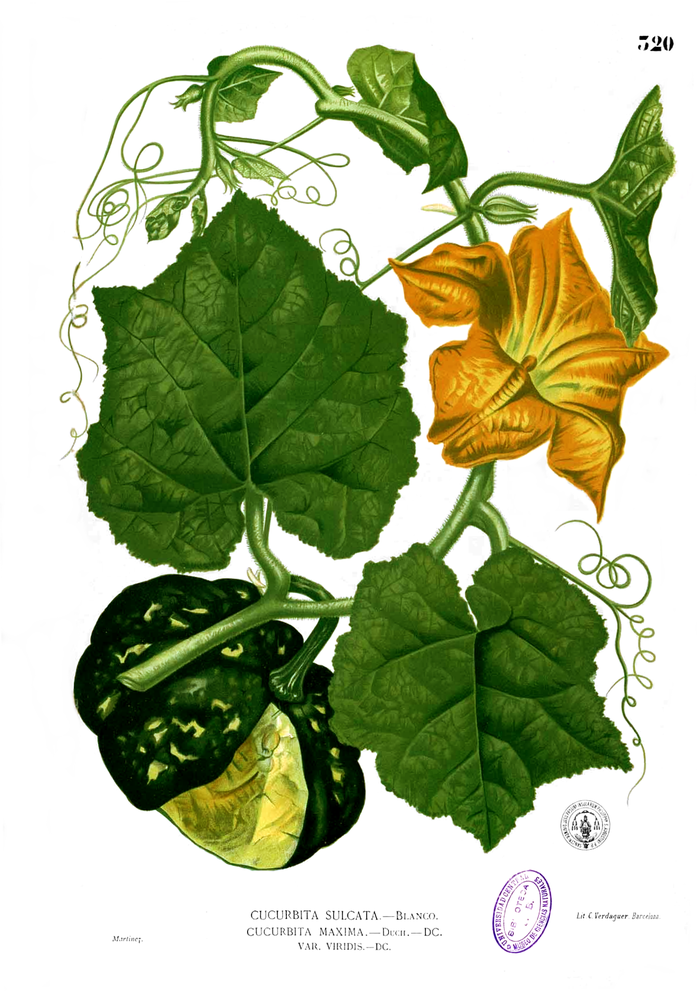
General Description
This species originated in South America from the wild subspecies Cucurbita maxima subsp. andreana over 4,000 years ago. Cucurbita maxima, known for modern varieties as Hubbard, Delicious, Marblehead, Boston Marrow, and Turks Turban, originated in northern Argentina near the Andes or in certain Andean valleys. Secondary centers of diversity include India, Bangladesh, Myanmar, and the southern Appalachians. Different squash types of this species were introduced into North America as early as the 16th century. By the American Revolution, the species was in cultivation by Native American tribes throughout the present-day United States. By the early 19th century, at least three varieties are known to have been commercially introduced in North America from seeds obtained from Native Americans.
Family Context
The Cucurbitaceae family is widely distributed in tropical and subtropical regions. Notable medicinal members include:
- Bitter Melon — 88 documented uses
- Luffa — 41 documented uses
- Calabash Gourd — 38 documented uses
- Chinese Cucumber — 31 documented uses
Geographic Distribution
Pumpkin has been recorded in 10 countries and territories worldwide, including Afghanistan, Argentina, Spain, France, Hungary, and others.
Traditional Uses
Pumpkin has been traditionally used for digestive health, skin and wound care, and urinary tract health, among other applications.
Digestive health.
- Vermifuge
For digestive complaints, the herb is typically prepared as a tea or decoction taken before meals. The bitter compounds stimulate digestive secretions and improve nutrient absorption. Some traditions use the powdered root or leaves in small doses as a stomachic tonic.
Skin and wound care.
- Boil
- Burn
- Rash
For skin conditions, the fresh or dried plant is applied topically as a poultice, wash, or compress. A strong decoction can be used to clean wounds and sores. The antimicrobial properties help prevent infection while promoting tissue repair.
Urinary tract health.
- Diuretic
Urinary tract applications typically involve drinking the herb as a mild tea, which increases urine production and helps flush the urinary system. It may be combined with other demulcent herbs to soothe irritated tissues.
Active Compounds
Phytochemical research has identified 16 compounds in this species, including a diverse array of phytochemical classes (see the Complete Chemical Inventory below for the full list).