Botanical Overview
Sangre de Drago (Croton lechleri) is a species in the Euphorbiaceae family. The spurge family (Euphorbiaceae) includes an extremely diverse group of plants ranging from small herbs to large trees, many with milky sap that can be irritating or toxic. The flowers are typically small and unisexual, often arranged in distinctive inflorescences. Many species contain diterpene esters and other bioactive compounds. Although comprehensive ethnobotanical records are limited, phytochemical studies have identified 30 compounds in this species, suggesting potential medicinal value.
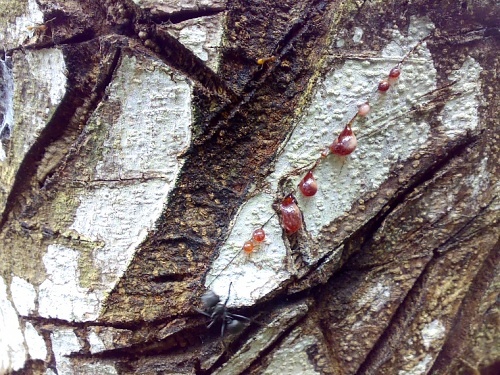
General Description
It is commonly known as sangre de grado (sic, Peruvian Spanish), sangre de drago (Ecuadorian Spanish) or sangre de grada (sic, Bolivian Spanish). They refer to this tree’s (and several related species’) thick red latex. The latex has medicinal properties, and is used by local peoples as a liquid bandage, applied to seal wounds, as it dries quickly to form a protective skin-like barrier. Its use by native people has led to scientific study and observation of its in vitro antioxidant activity as well as both mutagenic and antimutagenic behavior. The latex also contains a number of chemicals, including taspine. Oligomeric proanthocyanidins, another kind of chemical contained in the latex, have been investigated for the treatment of HIV-associated diarrhea under the name crofelemer. In January 2013, crofelemer, under the trade name Mytesi, was approved by the FDA for the treatment of non-infectious diarrhea in HIV+ patients.
Family Context
The Euphorbiaceae family is large and globally distributed. Notable medicinal members include:
- Castorbean — 105 documented uses
- Physic Nut — 95 documented uses
- Queensland Asthma Herb — 53 documented uses
- Spanish Physic Nut — 45 documented uses
Geographic Distribution
Sangre de Drago has been recorded in 6 countries and territories worldwide, including Bolivia, Brazil, Colombia, Ecuador, Peru, and others.
Active Compounds
Phytochemical research has identified 30 compounds in this species, including a diverse array of phytochemical classes (see the Complete Chemical Inventory below for the full list).
The identified compounds include the following categories:
- Flavonoid: antioxidant compounds that protect cells from oxidative damage
- Phenolic: antioxidant compounds that neutralize free radicals
- Sterol: cholesterol-like compounds with anti-inflammatory properties
Research Status
Although this species has documented phytochemical constituents, its ethnobotanical and clinical documentation remains incomplete. The limited documentation available for this species represents an opportunity for ethnobotanical research.