Botanical Overview
Cascarilla (Croton eluteria) belongs to the Euphorbiaceae family. Limited but reliable traditional records indicate this plant has recognized medicinal applications in one or more healing traditions. The spurge family (Euphorbiaceae) includes an extremely diverse group of plants ranging from small herbs to large trees, many with milky sap that can be irritating or toxic. The flowers are typically small and unisexual, often arranged in distinctive inflorescences. Many species contain diterpene esters and other bioactive compounds.
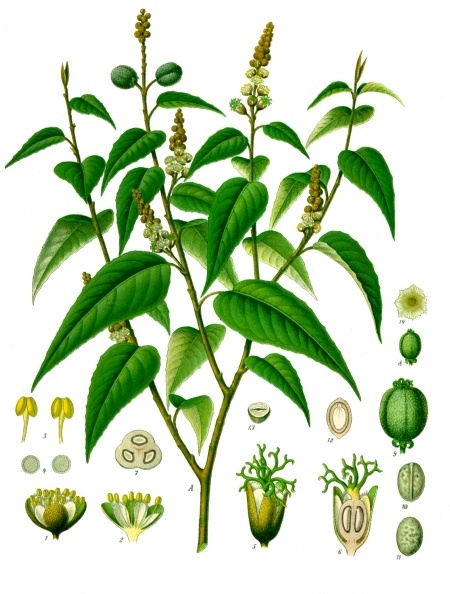
General Description
It has been naturalized in other tropical regions of the Americas. It grows to be a small tree or tall shrub, rarely reaching 20 feet (6 m) in height. Its leaves are scanty, alternate, ovate-lanceolate, averaging 2 inches (5 cm) long, with close scaling below, giving a metallic silver-bronze appearance, and scattered white scales above. The flowers are small, with white petals, and very fragrant, appearing in March and April. The scented bark is fissured, pale yellowish brown, and may be covered in lichen.
Family Context
The Euphorbiaceae family is large and globally distributed. Notable medicinal members include:
- Castorbean — 105 documented uses
- Physic Nut — 95 documented uses
- Queensland Asthma Herb — 53 documented uses
- Spanish Physic Nut — 45 documented uses
Geographic Distribution
Cascarilla has been recorded in 10 countries and territories worldwide, including Australia, Bahamas, Cuba, Dominican Republic, Haiti, and others.
Traditional Uses
Cascarilla has been traditionally used for nervous system disorders and metabolic and nutritional health.
Nervous system disorders.
- Narcotic
Nervous system support involves taking the herb as a warm tea, often in the evening or before bed. The calming compounds interact with neurotransmitter systems to promote relaxation and restful sleep.
Metabolic and nutritional health.
- Tonic
Metabolic applications include consuming the plant as a food, fresh juice, or herbal infusion. Regular use supports the body’s natural metabolic processes and nutritional status.
Active Compounds
Phytochemical research has identified 30 compounds in this species, including a diverse array of phytochemical classes (see the Complete Chemical Inventory below for the full list).
The identified compounds include the following categories:
- Phenolic: antioxidant compounds that neutralize free radicals
- Alkaloid: nitrogenous compounds with diverse pharmacological activities