Botanical Overview
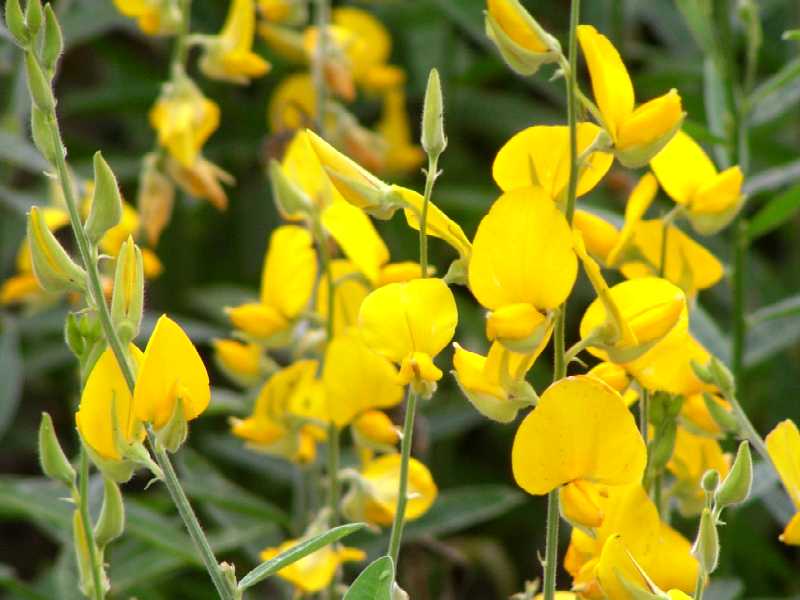
Sunhemp (Crotalaria juncea) belongs to the Fabaceae family. Limited but reliable traditional records indicate this plant has recognized medicinal applications in one or more healing traditions. The legume family (Fabaceae) includes trees, shrubs, and herbs that produce pods (legumes) and form nitrogen-fixing root nodules through symbiosis with bacteria. The flowers are typically pea-shaped with five petals. This large family provides food staples, timber, and numerous medicinal species.
General Description
It is generally considered to have originated in India. It is now widely grown in the Indian subcontinent and Brazil for its fiber, which makes it especially useful in the manufacturing of twine, rug yarn and fish nets. This plant is also used as forage for cattle and goats as they have a significant percentage of protein (34. 6%). Additionally, according to new research from the Agricultural Research Service (ARS), Sunn hemp is being looked at as a possible bio-fuel. After being put under experimental research the Sunn hemp was found to have produced 82. 4 gigajoules of energy per acre, equivalent to 620 gallons of gas. Although it is a useful plant it can be an invasive weed and has been listed as a noxious weed in some jurisdictions.
Family Context
The Fabaceae family is large and globally distributed. Notable medicinal members include:
- Soybean — 76 documented uses
- Crab’s Eye — 73 documented uses
- Tamarind — 59 documented uses
- Common Indigo — 51 documented uses
Geographic Distribution
Sunhemp has been recorded in 10 countries and territories worldwide, including Australia, Brazil, China, Indonesia, India, and others.
Traditional Uses
Sunhemp has been traditionally used for skin and wound care, reproductive health, and metabolic and nutritional health.
Skin and wound care.
- Psoriasis
For skin conditions, the fresh or dried plant is applied topically as a poultice, wash, or compress. A strong decoction can be used to clean wounds and sores. The antimicrobial properties help prevent infection while promoting tissue repair.
Reproductive health.
- Emmenagogue
In traditional contexts, reproductive health applications typically involve internal preparations such as teas or decoctions. The herb may be taken at specific times during the menstrual cycle.
Metabolic and nutritional health.
- Depurative
Metabolic applications include consuming the plant as a food, fresh juice, or herbal infusion. Regular use supports the body’s natural metabolic processes and nutritional status.
Active Compounds
Phytochemical research has identified 15 compounds in this species, including a diverse array of phytochemical classes (see the Complete Chemical Inventory below for the full list).
The identified compounds include the following categories:
- Alkaloid: nitrogenous compounds with diverse pharmacological activities