Botanical Overview
Cornus capitata is a species in the Cornaceae family. This species belongs to the Cornaceae family, a group of flowering plants. Phytochemical data for this species are limited at present.
General Description
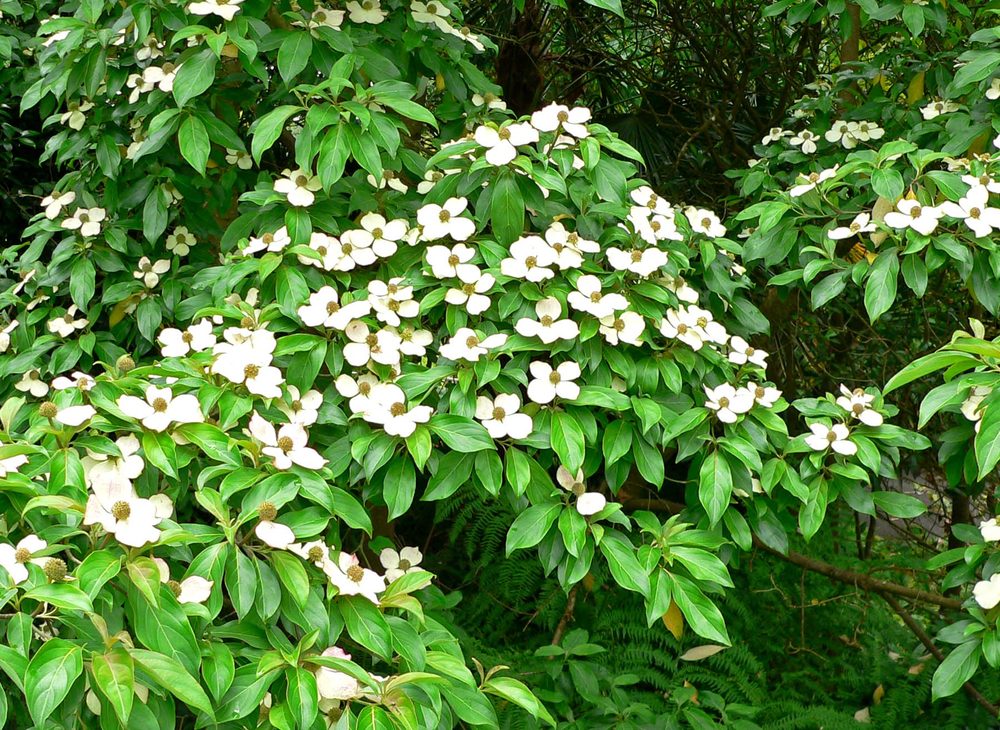
It is native to the low-elevation woodlands of the Himalayas in China, India, Pakistan, Nepal, and Bhutan. It is naturalized in parts of Australia and New Zealand, but is also grown elsewhere as an ornamental. This is an evergreen tree growing to 12 meters in height and width. The leaves are gray-green and pale and fuzzy underneath, and several centimeters long. It flowers during the summer in white blooms. The infructescence is a small aggregate of several individual fruits fused into a red body 2 or 3 centimeters across. It is edible but sometimes bitter. There are several varieties and hybrids. The species is naturalised in the states of New South Wales and Victoria in Australia. The common name Bentham’s cornel derives from the alternative label Benthamia fragifera, coined by John Lindley in honour of fellow botanist George Bentham.
Family Context
The Cornaceae family is widely distributed. Notable medicinal members include:
- Chinese Dogwood — 25 documented uses
- American Dogwood — 15 documented uses
- Cornus macrophylla — 3 documented uses
- Japanese Aucuba — 2 documented uses
Geographic Distribution
Cornus capitata has been recorded in 10 countries and territories worldwide, including Australia, Bhutan, China, Spain, United Kingdom, and others.
Active Compounds
Phytochemical research has identified 2 compounds in this species: betulin, betulinic-acid.
Research Status
Although this species has documented phytochemical constituents, its ethnobotanical and clinical documentation remains incomplete. Additional phytochemical investigation could identify novel bioactive compounds in this plant.