Botanical Overview
Guggul (Commiphora wightii) is a species in the Burseraceae family. This species belongs to the Burseraceae family, a group of flowering plants. Although comprehensive ethnobotanical records are limited, phytochemical studies have identified 30 compounds in this species, suggesting potential medicinal value.
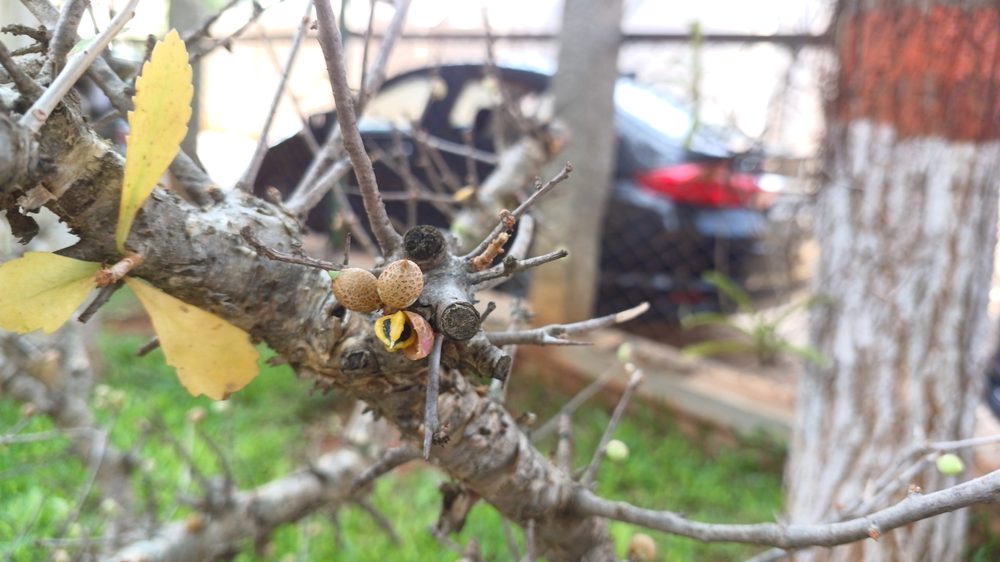
General Description
The species is native to western India, from where it was introduced westward to southern Pakistan and the middle-east. It prefers arid and semi-arid climates and is tolerant of poor soil.
Family Context
The Burseraceae family is widely distributed. Notable medicinal members include:
- Gumbolimbo — 41 documented uses
- Gugul — 33 documented uses
- Myrrh — 16 documented uses
- Salaki — 11 documented uses
Geographic Distribution
Guggul has been recorded in 7 countries and territories worldwide, including India, Oman, Pakistan, Sweden, United States, and others.
Active Compounds
Phytochemical research has identified 30 compounds in this species, including a diverse array of phytochemical classes (see the Complete Chemical Inventory below for the full list).
The identified compounds include the following categories:
- Sterol: cholesterol-like compounds with anti-inflammatory properties
- Alkaloid: nitrogenous compounds with diverse pharmacological activities
Research Status
Although this species has documented phytochemical constituents, its ethnobotanical and clinical documentation remains incomplete. The limited documentation available for this species represents an opportunity for ethnobotanical research.