Botanical Overview
Common dayflower (Commelina communis) is a flowering plant in the Commelinaceae family. This plant has earned a place in traditional medicine through its consistent therapeutic benefits, recorded across multiple cultures. This species belongs to the Commelinaceae family, a group of flowering plants.
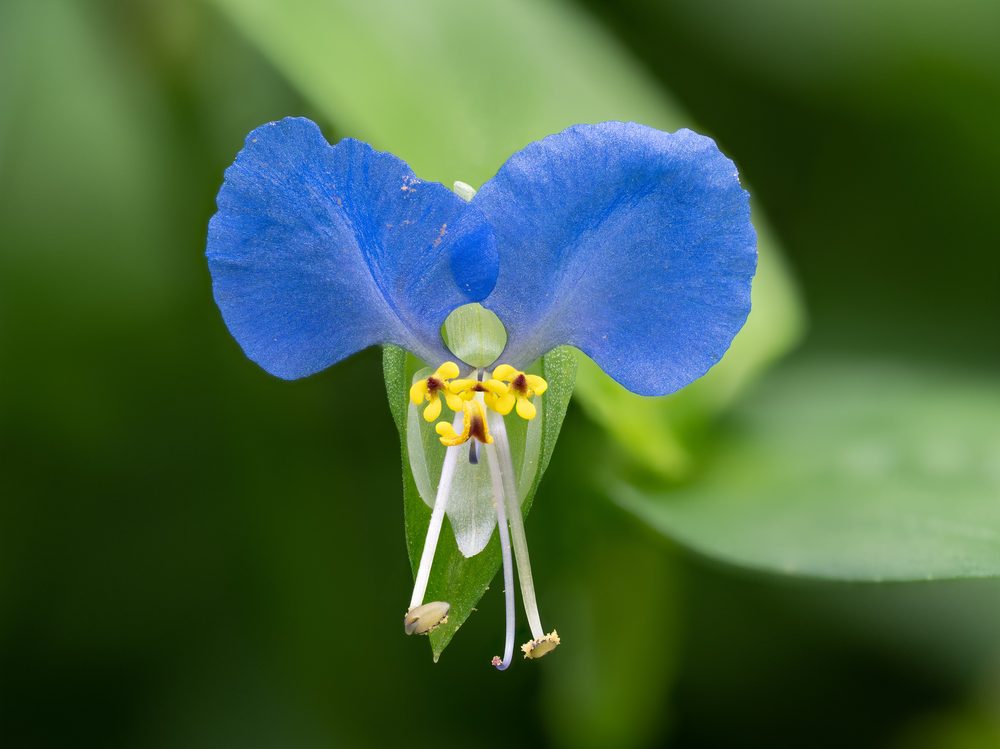
General Description
It gets its name because the blooms last for only one day. It is native throughout much of East Asia and northern parts of Southeast Asia. In China, the plant is known as yazhicao (simplified Chinese: 鸭 跖 草; traditional Chinese: 鴨跖草; pinyin: yāzhīcǎo), roughly translating to “duckfoot herb”, while in Japan it is known as tsuyukusa (露 草, tsuyukusa), meaning “dew herb”. It has also been introduced to parts of central and southeastern Europe and much of eastern North America, where it has spread to become a noxious weed. It is common in disturbed sites and in moist soil. The flowers emerge from summer through fall and are distinctive with two relatively large blue petals and one very small white petal. The Asiatic dayflower plant serves as the type species for its large genus. Linnaeus picked the name Commelina in honour of the two Dutch botanists of the Commelijn family, using the two large showy petals of Commelina communis to symbolise them. Linnaeus described the species in the first edition of his landmark work, Species Plantarum, in 1753. Long before the plant was studied in Europe, however, it had been used for generations in traditional Chinese medicine. The flowers have also been used in Japan to produce a dye and a pigment that was used in many world-renowned Ukiyo-e woodcuts from the 18th and early 19th centuries. In the modern era the plant has found limited use as a model organism in the field of plant physiology due to its complex pigment chemistry and the ease of viewing its stomata. The Asiatic dayflower is considered a weed both in areas where it was introduced and in certain parts of its native range. The flowers’ interactions with pollinators have been well studied and have helped to support important hypotheses about pollination in the field of plant ecology. Recent research has also revealed that the Asiatic dayflower can bioaccumulate a number of metals, making it a candidate for revegetating and essentially cleaning spoiled copper mines. Several animals and fungi use the plant as a food source, with a few species feeding upon it exclusively.
Family Context
The Commelinaceae family is widely distributed. Notable medicinal members include:
- Benghal dayflower — 5 documented uses
- Cordoban — 4 documented uses
Geographic Distribution
Common dayflower has been recorded in 10 countries and territories worldwide, including Canada, Switzerland, China, Germany, Italy, and others.
Traditional Uses
Common dayflower has been traditionally used for digestive health, respiratory conditions, and skin and wound care, among other applications.
Digestive health.
- Diarrhea
For digestive complaints, the herb is typically prepared as a tea or decoction taken before meals. The bitter compounds stimulate digestive secretions and improve nutrient absorption. Some traditions use the powdered root or leaves in small doses as a stomachic tonic.
Respiratory conditions.
- Cold
Respiratory conditions are addressed through steam inhalation of the herb’s vapors or internal use as a warm tea. The hot infusion acts as an expectorant, helping to loosen phlegm and clear congestion. Some traditions combine it with honey for coughs.
Skin and wound care.
- Abscess
- Boil
For skin conditions, the fresh or dried plant is applied topically as a poultice, wash, or compress. A strong decoction can be used to clean wounds and sores. The antimicrobial properties help prevent infection while promoting tissue repair.
Active Compounds
Phytochemical research has identified 10 compounds in this species, including a diverse array of phytochemical classes (see the Complete Chemical Inventory below for the full list).
The identified compounds include the following categories:
- Flavonoid: antioxidant compounds that protect cells from oxidative damage