Botanical Overview
Combretum imberbe belongs to the Combretaceae family. While not among the most extensively documented medicinal plants, this species has recorded uses that warrant attention from researchers and practitioners. The combretum family (Combretaceae) includes trees, shrubs, and climbers with simple, opposite or alternate leaves and small flowers with four or five petals. The fruits are often winged or ridged. Many species contain tannins and have astringent, antimicrobial properties.
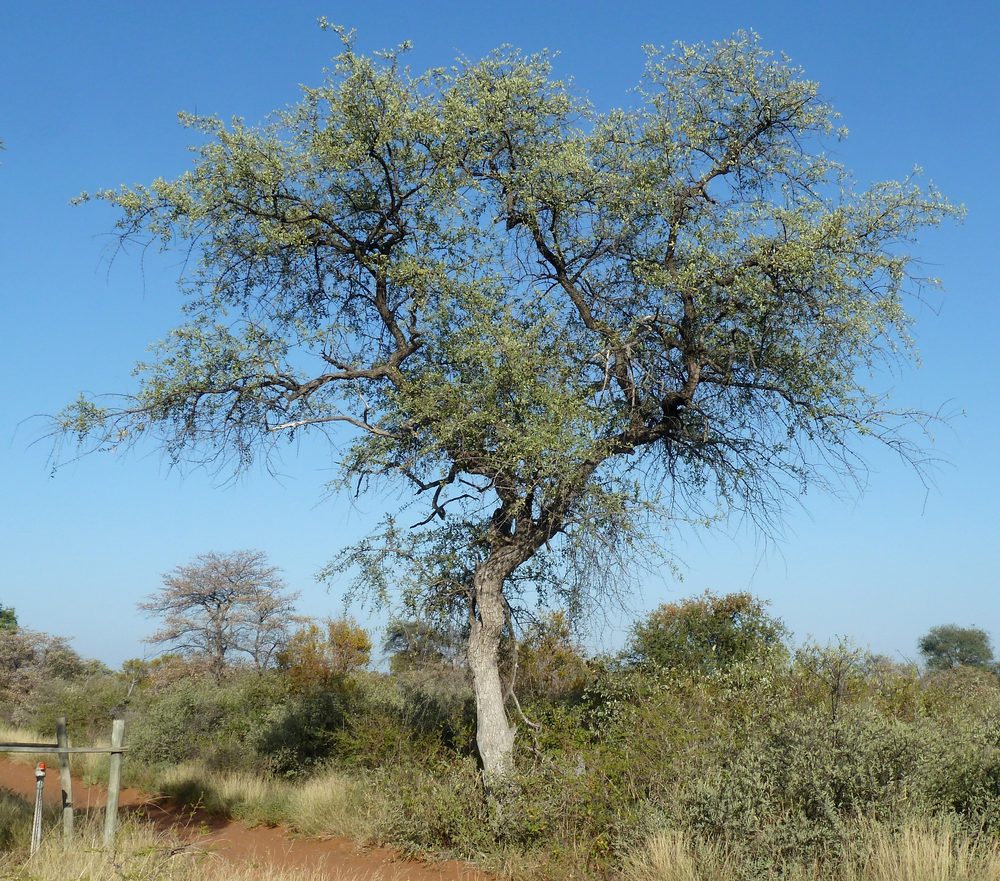
General Description
The medium to large tree has a sparse, semi-deciduous canopy of grey-green leaves. The twigs and leaves are hairless as the name imberbe suggests. Its heartwood is dark brown, close-grained, very hard and heavy, as suggested by its vernacular name “leadwood”, and durable; it is much sought after in the woodcarving industry. The Hereros and Ovambos of Namibia attach special cultural and religious significance to the tree, as to them it is the great ancestor of all animals and people, which must be passed with respect.
Family Context
The Combretaceae family is widely distributed. Notable medicinal members include:
- Ink Nut — 49 documented uses
- Indian Almond — 44 documented uses
- Arjun — 27 documented uses
- Rangoon Creeper — 21 documented uses
Geographic Distribution
Combretum imberbe has been recorded in 10 countries and territories worldwide, including Angola, Botswana, Malawi, Mozambique, Namibia, and others.
Traditional Uses
Combretum imberbe has been traditionally used for respiratory conditions.
Respiratory conditions.
- Cough
Respiratory conditions are addressed through steam inhalation of the herb’s vapors or internal use as a warm tea. The hot infusion acts as an expectorant, helping to loosen phlegm and clear congestion. Some traditions combine it with honey for coughs.
Active Compounds
Phytochemical research has identified 1 compound in this species: betulinic-acid.