Botanical Overview
Chaya (Cnidoscolus chayamansa) is a species in the Euphorbiaceae family. The spurge family (Euphorbiaceae) includes an extremely diverse group of plants ranging from small herbs to large trees, many with milky sap that can be irritating or toxic. The flowers are typically small and unisexual, often arranged in distinctive inflorescences. Many species contain diterpene esters and other bioactive compounds. Although comprehensive ethnobotanical records are limited, phytochemical studies have identified 30 compounds in this species, suggesting potential medicinal value.
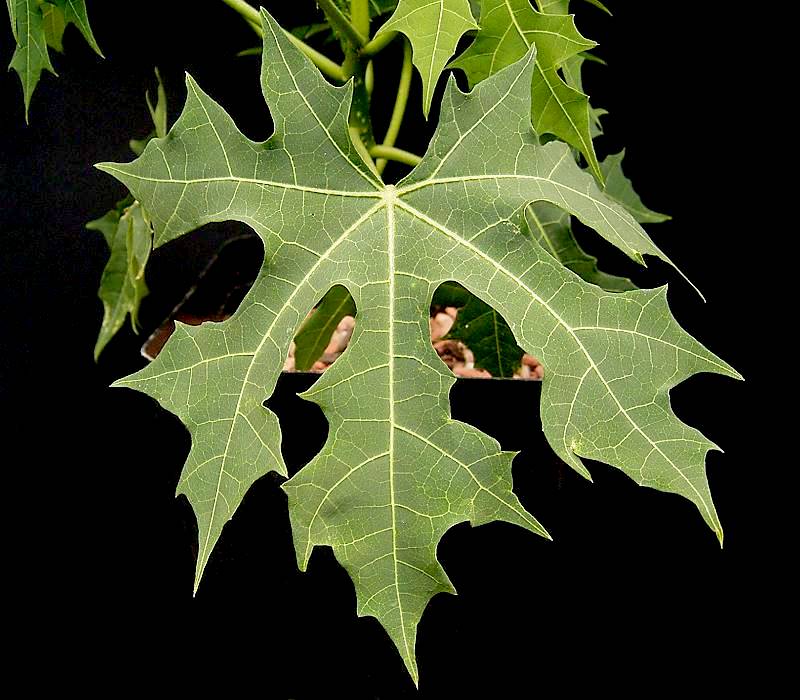
General Description
Cnidoscolus aconitifolius, commonly known as chaya, tree spinach, Mayan tree spinach, or spinach tree, is a large, fast-growing and leafy perennial shrub in the spurge family Euphorbiaceae.
Family Context
The Euphorbiaceae family is large and globally distributed. Notable medicinal members include:
- Castorbean — 105 documented uses
- Physic Nut — 95 documented uses
- Queensland Asthma Herb — 53 documented uses
- Spanish Physic Nut — 45 documented uses
Geographic Distribution
Chaya has been recorded in 7 countries and territories worldwide, including Brazil, Belize, Costa Rica, Micronesia, Guatemala, and others.
Active Compounds
Phytochemical research has identified 30 compounds in this species, including a diverse array of phytochemical classes (see the Complete Chemical Inventory below for the full list).
The identified compounds include the following categories:
- Alkaloid: nitrogenous compounds with diverse pharmacological activities
Research Status
Although this species has documented phytochemical constituents, its ethnobotanical and clinical documentation remains incomplete. Additional phytochemical investigation could identify novel bioactive compounds in this plant.