Botanical Overview
Lime (Citrus limetta) is a species in the Rutaceae family. The citrus family (Rutaceae) includes trees and shrubs with gland-dotted leaves that release aromatic oils when crushed. The flowers are typically white with four or five petals, and the fruits are often modified berries with a leathery rind. Most species produce alkaloids and limonoids with medicinal activity. Phytochemical data for this species are limited at present.
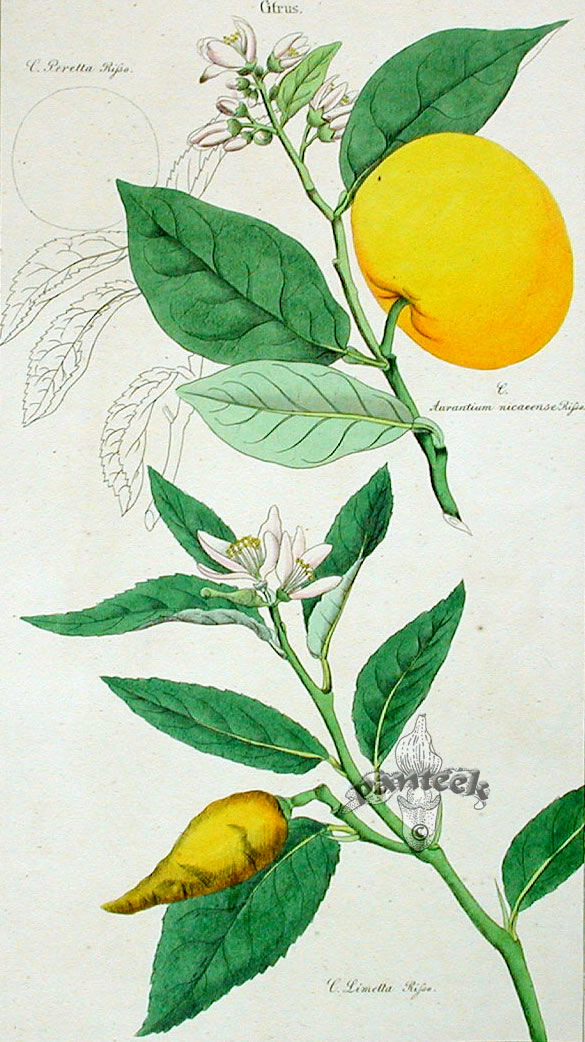
General Description
limon ‘Limetta’, is a species of citrus, commonly known as mousami, musami, mosambi, sweet lime, sweet lemon, and sweet limetta, it is a member of the sweet lemons. It is small and round, like a common lime. It is a cross between the citron (Citrus medica) and a bitter orange (Citrus × aurantium). It is native to the southern regions of Iran and also cultivated in the Mediterranean Basin. It is a different fruit from the Palestinian sweet lime and from familiar sour limes such as the Key lime and the Persian lime. However, genomic analysis revealed that it is highly similar to Rhobs el Arsa, and the two likely represent progeny of distinct crosses involving the same citrus parents. The South Asian cultivars originated in Mozambique and were brought to South Asia by the Portuguese. The common name mosambi and its variants trace their origin to Mozambique.
Family Context
The Rutaceae family is primarily tropical and subtropical. Notable medicinal members include:
- Kabusu — 76 documented uses
- Petitgrain — 76 documented uses
- Rue — 54 documented uses
- Orange — 47 documented uses
Geographic Distribution
Lime has been recorded in , and Colombia.
Active Compounds
Phytochemical research has identified 1 compound in this species: seselin.
Research Status
Although this species has documented phytochemical constituents, its ethnobotanical and clinical documentation remains incomplete. Further ethnobotanical and pharmacological research may reveal additional therapeutic applications for this species.