Botanical Overview
Pyrethrum (Chrysanthemum cinerariifolium) belongs to the Asteraceae family. Limited but reliable traditional records indicate this plant has recognized medicinal applications in one or more healing traditions. The daisy family (Asteraceae) is one of the largest plant families, characterized by composite flower heads (capitula) that contain many small florets surrounded by bracts. Plants range from tiny alpine herbs to large tropical trees. The family includes many medicinally important species with bitter compounds and essential oils.
General Description
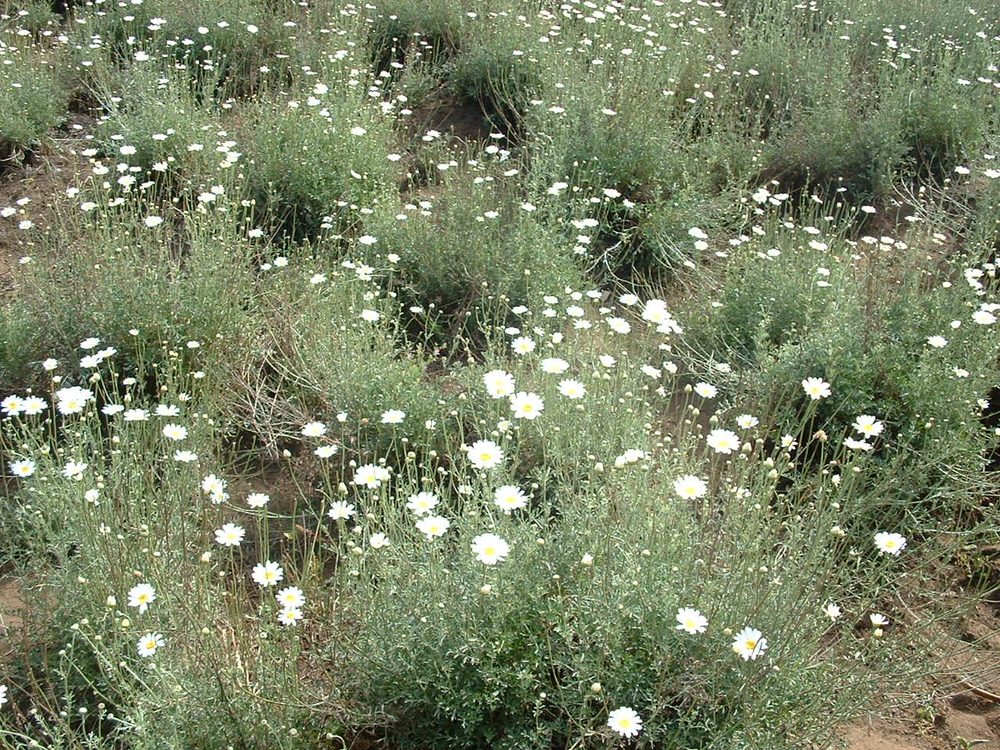
It is called the Dalmatian chrysanthemum or Dalmatian pyrethrum, denoting its origin in western coastal Balkan Peninsula, where it ranges from Dalmatia to Albania. It looks more like the common daisy than other pyrethrums do. Its flowers, typically white with yellow centers, grow from numerous fairly rigid stems. Plants have blue-green leaves and grow to 45 to 100 cm in height.
Family Context
The Asteraceae family is extremely large and diverse. Notable medicinal members include:
- Yarrow — 63 documented uses
- Gobo — 63 documented uses
- Mugwort — 55 documented uses
- Sunflower — 52 documented uses
Geographic Distribution
Pyrethrum has been recorded in 10 countries and territories worldwide, including Brazil, Switzerland, China, United Kingdom, Croatia, and others.
Active Compounds
Phytochemical research has identified 23 compounds in this species, including a diverse array of phytochemical classes (see the Complete Chemical Inventory below for the full list).
The identified compounds include the following categories:
- Alkaloid: nitrogenous compounds with diverse pharmacological activities