Botanical Overview
Irish Moss (Chondrus crispus) is a species in the family. This species belongs to the family, a group of flowering plants. Although comprehensive ethnobotanical records are limited, phytochemical studies have identified 30 compounds in this species, suggesting potential medicinal value.
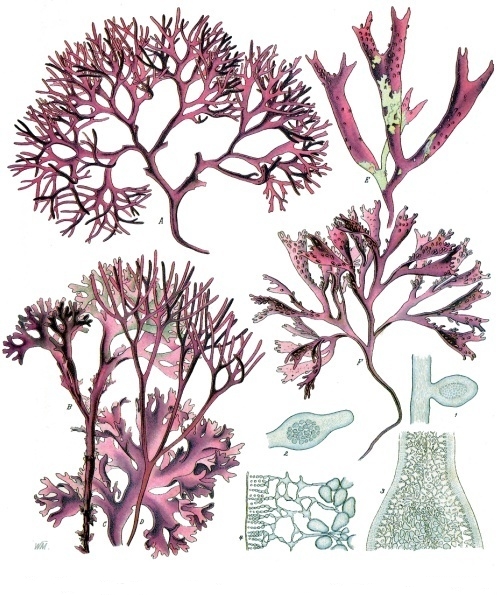
General Description
In its fresh condition it is soft and cartilaginous, varying in color from a greenish-yellow, through red, to a dark purple or purplish-brown. The principal constituent is a mucilaginous body, made of the polysaccharide carrageenan, which constitutes 55% of its dry weight. The organism also consists of nearly 10% dry weight protein and about 15% dry weight mineral matter, and is rich in iodine and sulfur. When softened in water it has a sea-like odour. Because of the abundant cell wall polysaccharides, it will form a jelly when boiled, containing from 20 to 100 times its weight of water.
Geographic Distribution
Irish Moss has been recorded in 10 countries and territories worldwide, including Canada, Denmark, Spain, France, United Kingdom, and others.
Active Compounds
Phytochemical research has identified 30 compounds in this species, including a diverse array of phytochemical classes (see the Complete Chemical Inventory below for the full list).
The identified compounds include the following categories:
- Sterol: cholesterol-like compounds with anti-inflammatory properties
- Alkaloid: nitrogenous compounds with diverse pharmacological activities
Research Status
Although this species has documented phytochemical constituents, its ethnobotanical and clinical documentation remains incomplete. Additional phytochemical investigation could identify novel bioactive compounds in this plant.