Botanical Overview
Curare (Chondrodendron tomentosum) belongs to the Menispermaceae family. While not among the most extensively documented medicinal plants, this species has recorded uses that warrant attention from researchers and practitioners. This species belongs to the Menispermaceae family, a group of flowering plants.
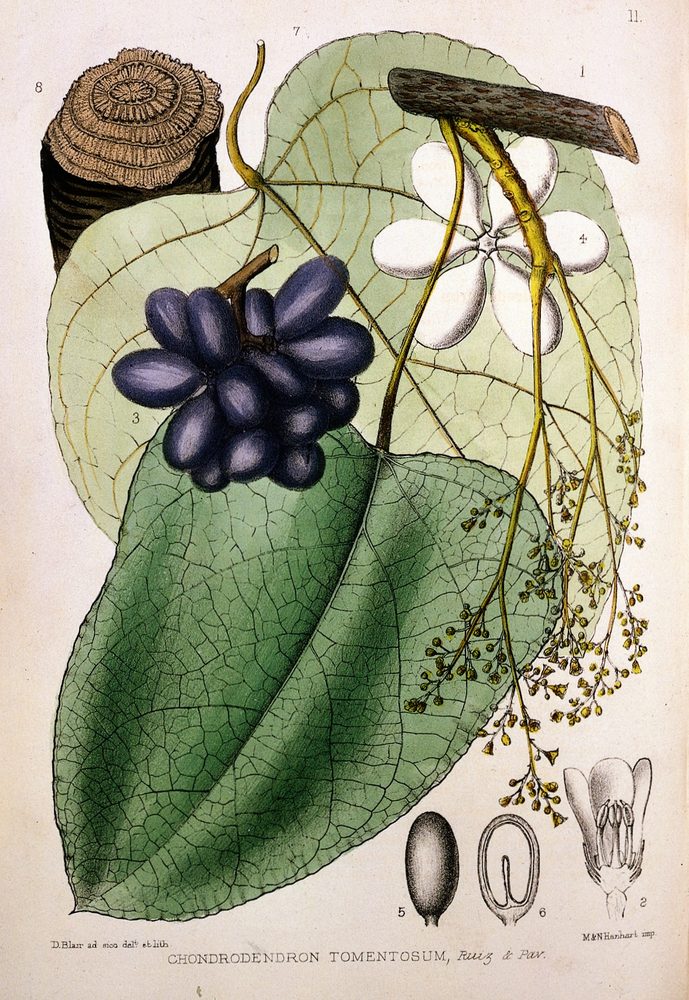
General Description
It is a large tropical liana native to Central and South America. It contains highly toxic alkaloids and is one of the sources of the arrow poison curare – specifically ’tube curare’, the name of which is derived from the name of the medicinally valuable alkaloid tubocurarine.
Family Context
The Menispermaceae family is widely distributed. Notable medicinal members include:
- Butua — 60 documented uses
- Moonseed — 16 documented uses
- Indian Tape-Vine — 12 documented uses
- Levant Berry — 9 documented uses
Geographic Distribution
Curare has been recorded in 9 countries and territories worldwide, including Bolivia, Brazil, Colombia, Ecuador, Jamaica, and others.
Traditional Uses
Curare has been traditionally used for urinary tract health, fever management, and metabolic and nutritional health, among other applications.
Urinary tract health.
- Diuretic
Urinary tract applications typically involve drinking the herb as a mild tea, which increases urine production and helps flush the urinary system. It may be combined with other demulcent herbs to soothe irritated tissues.
Fever management.
- Fever
Febrifuge preparations are typically administered as hot teas to induce perspiration, which helps the body regulate temperature. The patient is kept warm and encouraged to rest while the herb promotes sweating.
Metabolic and nutritional health.
- Tonic
Metabolic applications include consuming the plant as a food, fresh juice, or herbal infusion. Regular use supports the body’s natural metabolic processes and nutritional status.
Active Compounds
Phytochemical research has identified 14 compounds in this species, including a diverse array of phytochemical classes (see the Complete Chemical Inventory below for the full list).
The identified compounds include the following categories:
- Alkaloid: nitrogenous compounds with diverse pharmacological activities