Botanical Overview
Cedar of Lebanon (Cedrus libani) belongs to the Pinaceae family. While not among the most extensively documented medicinal plants, this species has recorded uses that warrant attention from researchers and practitioners. The pine family (Pinaceae) includes coniferous trees with needle-like leaves arranged in bundles or spirally along the branches. They produce male and female cones and are wind-pollinated. The resin contains turpentine and other terpenes with traditional medicinal uses for respiratory conditions.
General Description
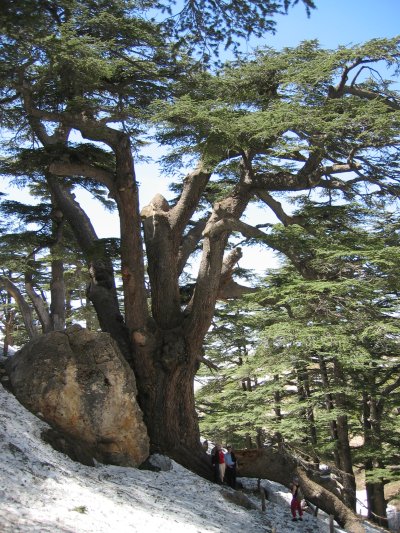
Known for its longevity, height, and durable wood, it has held profound significance for millennia. The tree features in ancient Mesopotamian literature. It is the national emblem of Lebanon and is widely used as an ornamental tree in parks and gardens. Historically the ancient Phoenicians used Cedar wood for shipbuilding and traded Cedar trees with Ancient Egypt, Ancient Greece, Anatolians, Iberians, Punics, Sicilians, Romans and Ancient Iraq. Cedrus libani can reach 40 m (130 ft) in height, with a massive monopodial columnar trunk up to 2. 5 m (8 ft 2 in) in diameter. The trunks of old, open-grown trees often fork into several large, erect branches. The rough and scaly bark is dark grey to blackish brown, and is run through by deep, horizontal fissures that peel in small chips. The first-order branches are ascending in young trees; they grow to a massive size and take on a horizontal, wide-spreading disposition. Second-order branches are dense and grow in a horizontal plane. The crown is conical when young, becoming broadly tabular with age with fairly level branches; trees growing in dense forests maintain more conical shape.
Family Context
The Pinaceae family is widely distributed in the Northern Hemisphere. Notable medicinal members include:
- Longleaf Pine — 29 documented uses
- Chir Pine — 27 documented uses
- Silver-Fir — 20 documented uses
- Pinyon Pine — 15 documented uses
Geographic Distribution
Cedar of Lebanon has been recorded in 10 countries and territories worldwide, including Cyprus, Germany, Spain, France, United Kingdom, and others.
Traditional Uses
Cedar of Lebanon has been traditionally used for urinary tract health.
Urinary tract health.
- Diuretic
Urinary tract applications typically involve drinking the herb as a mild tea, which increases urine production and helps flush the urinary system. It may be combined with other demulcent herbs to soothe irritated tissues.
Active Compounds
Phytochemical research has identified 3 compounds in this species: borneol, cis-atlantone, quinic-acid.