Botanical Overview
Khat (Catha edulis) is a flowering plant in the Celastraceae family. This plant has earned a place in traditional medicine through its consistent therapeutic benefits, recorded across multiple cultures. The staff-vine family (Celastraceae) includes shrubs, trees, and vines with simple, opposite or alternate leaves and small flowers. The fruits are often brightly colored capsules that split open to reveal seeds with fleshy arils. Many species produce alkaloids and terpenoids with insecticidal and medicinal properties.
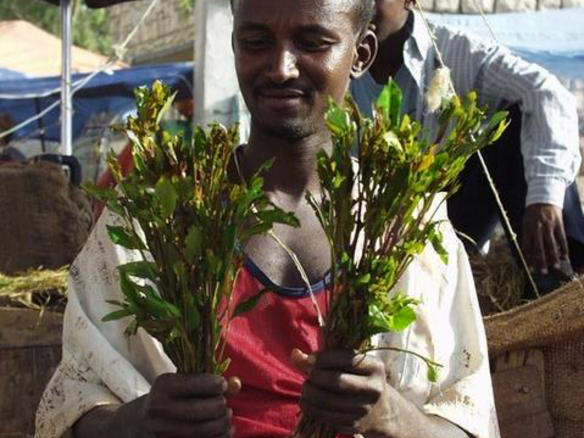
General Description
It is a shrub or tree native to eastern and southern Africa, ranging from Ethiopia and South Sudan to Angola and the Cape Provinces of South Africa. It grows in montane riverine and evergreen forests from 1,100 to 2,400 metres elevation.
Family Context
The Celastraceae family is widely distributed. Notable medicinal members include:
- Maytenus senegalensis — 24 documented uses
- Burning Bush — 18 documented uses
- Maytenus boaria — 1 documented uses
Geographic Distribution
Khat has been recorded in 10 countries and territories worldwide, including Cuba, Ethiopia, India, Kenya, New Zealand, and others.
Traditional Uses
Khat has been traditionally used for respiratory conditions, nervous system disorders, and reproductive health.
Respiratory conditions.
- Asthma
- Cough
Respiratory conditions are addressed through steam inhalation of the herb’s vapors or internal use as a warm tea. The hot infusion acts as an expectorant, helping to loosen phlegm and clear congestion. Some traditions combine it with honey for coughs.
Nervous system disorders.
- Narcotic
Nervous system support involves taking the herb as a warm tea, often in the evening or before bed. The calming compounds interact with neurotransmitter systems to promote relaxation and restful sleep.
Reproductive health.
- Aphrodisiac
In traditional contexts, reproductive health applications typically involve internal preparations such as teas or decoctions. The herb may be taken at specific times during the menstrual cycle.
Active Compounds
Phytochemical research has identified 26 compounds in this species, including a diverse array of phytochemical classes (see the Complete Chemical Inventory below for the full list).
The identified compounds include the following categories:
- Phenolic: antioxidant compounds that neutralize free radicals
- Alkaloid: nitrogenous compounds with diverse pharmacological activities
- Tannin: astringent compounds that tighten tissues and resist infection