Botanical Overview
Hsin-Pa-Pi (Catalpa ovata) belongs to the Bignoniaceae family. Limited but reliable traditional records indicate this plant has recognized medicinal applications in one or more healing traditions. This species belongs to the Bignoniaceae family, a group of flowering plants.
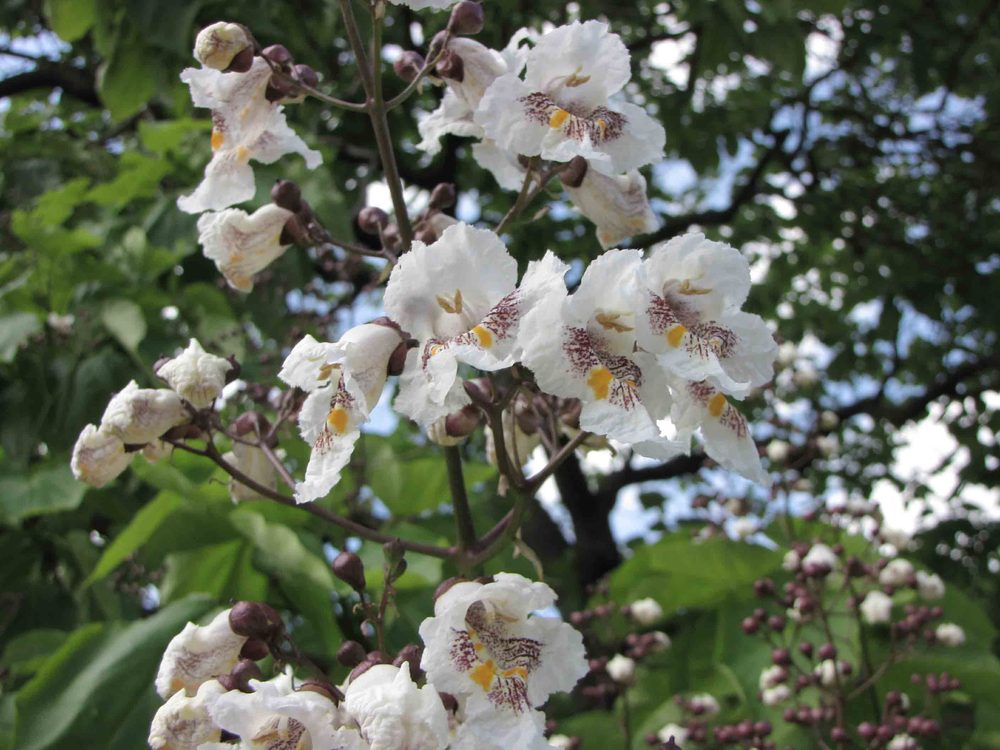
General Description
Compared to C. speciosa, it is much smaller, typically reaching heights between 20 and 30 feet (6 and 9 m). The inflorescences form 4–10-inch-long (100–250 mm) bunches of creamy white flowers with distinctly yellow tinging; individual flowers are about 1 inch (25 mm) wide. They bloom in July and August. The leaves are very similar in shape to those of Paulownia tomentosa, having three lobes (two are abruptly truncated on either edge, with a third, central, slightly acute, pointed lobe forming the leaf apex), and are darkly green. Fruits are very narrow, foot-long pods. Although native to the more temperate provinces within China (Anhui, Gansu, Hebei, Heilongjiang, Henan, Hubei, Jiangsu, Jilin, Liaoning, Nei Monggol, Ningxia, Qinghai, Shaanxi, Shandong, Shanxi, Sichuan, Xinjiang), C. ovata is also cultivated in North America and Europe, and has become a parent of Catalpa × erubescens with the American species Catalpa bignonioides. It is commonly used to make the undersides of qin.
Family Context
The Bignoniaceae family is widely distributed. Notable medicinal members include:
- Yellow Elder — 18 documented uses
- Jicaro — 15 documented uses
- Indian bean — 7 documented uses
- Spanish oak — 3 documented uses
Geographic Distribution
Hsin-Pa-Pi has been recorded in 10 countries and territories worldwide, including Belgium, Canada, China, Germany, Italy, and others.
Traditional Uses
Hsin-Pa-Pi has been traditionally used for urinary tract health.
Urinary tract health.
- Diuretic
Urinary tract applications typically involve drinking the herb as a mild tea, which increases urine production and helps flush the urinary system. It may be combined with other demulcent herbs to soothe irritated tissues.
Active Compounds
Phytochemical research has identified 30 compounds in this species, including a diverse array of phytochemical classes (see the Complete Chemical Inventory below for the full list).
The identified compounds include the following categories:
- Flavonoid: antioxidant compounds that protect cells from oxidative damage
- Terpene: aromatic compounds with anti-inflammatory and antimicrobial properties
- Sterol: cholesterol-like compounds with anti-inflammatory properties