Papaya

Botanical Overview

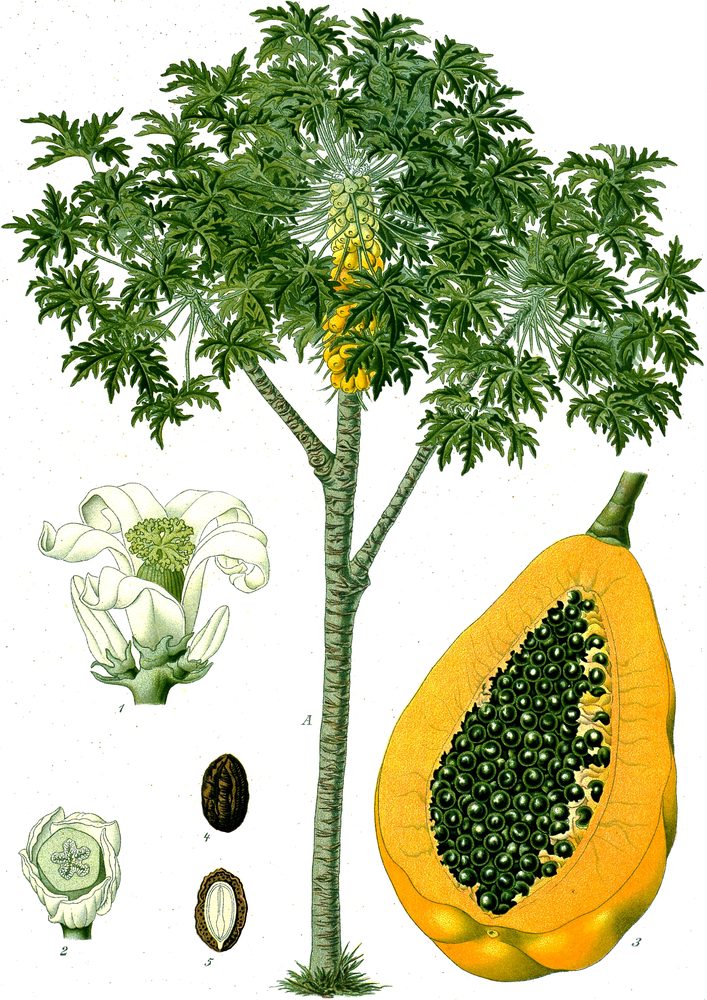
Commonly known as Papaya, this species belongs to the Caricaceae family. This species holds a prominent place in the global materia medica, with an extensive record of traditional use spanning diverse cultures and medical systems. This species belongs to the Caricaceae family, a group of flowering plants.
General Description

The papaya is the plant species Carica papaya, one of the 21 accepted species in the genus Carica of the family Caricaceae.

ⓘ Information
Description adapted from Wikipedia (CC BY-SA 4.0).

Traditional Uses

Papaya has been traditionally used for digestive health, respiratory conditions, and skin and wound care, among other applications.

Digestive health.

  • Vermifuge
  • Dysentery
  • Diarrhea
  • Dyspepsia

For digestive complaints, the herb is typically prepared as a tea or decoction taken before meals. The bitter compounds stimulate digestive secretions and improve nutrient absorption. Some traditions use the powdered root or leaves in small doses as a stomachic tonic.

Respiratory conditions.

  • Asthma
  • Pectoral

Respiratory conditions are addressed through steam inhalation of the herb’s vapors or internal use as a warm tea. The hot infusion acts as an expectorant, helping to loosen phlegm and clear congestion. Some traditions combine it with honey for coughs.

Skin and wound care.

  • Ulcer

For skin conditions, the fresh or dried plant is applied topically as a poultice, wash, or compress. A strong decoction can be used to clean wounds and sores. The antimicrobial properties help prevent infection while promoting tissue repair.

Active Compounds

Phytochemical research has identified 30 compounds in this species, including a diverse array of phytochemical classes (see the Complete Chemical Inventory below for the full list).

The identified compounds include the following categories:

  • Sterol: cholesterol-like compounds with anti-inflammatory properties
  • Alkaloid: nitrogenous compounds with diverse pharmacological activities
ⓘ Information
Information on this page is compiled from Dr. Duke’s Phytochemical and Ethnobotanical Databases (USDA ARS), a public domain resource. Consult a healthcare professional before using any herbal preparation.
⚠ Caution
Traditional records: This plant has documented uses including Abortifacient. Self-medication with herbs carries risks including allergic reactions, drug interactions, and toxicity. Only use under the supervision of a qualified healthcare professional.

Complete Use Records

CategoryCultural Context
VermifugeElsewhere, Haiti, Malaya, Panama, Samoa, South America, Turkey
WartElsewhere, Indonesia, Jamaica, Peru, South Africa, Sri Lanka
DigestiveChina, Dominican Republic, Elsewhere, Panama, Turkey
AbortifacientJava, Panama(Choco), Turkey
AsthmaElsewhere, Mauritius, Mexico
CancerAustralia, Elsewhere, Mexico
CornIndia, Malagasy, Philippines
EmmenagogueElsewhere, Mexico, Turkey
AmebiasisElsewhere, Japan
AntibioticElsewhere, Trinidad
DiureticElsewhere, Trinidad
DysenteryJapan, Panama
FeverJava, Mexico
FumitoryElsewhere, New Caledonia
PectoralElsewhere, Mexico
ScorpionElsewhere, Trinidad
TumorGhana, Nigeria
UlcerElsewhere, Panama
AnodyneElsewhere
AntiphlogisticElsewhere
ArthritisJava
CardiacTurkey
CholagogueElsewhere
ConstipationTrinidad
DecoagulantTrinidad
DiarrheaPanama
DiphtheriaElsewhere
DyspepsiaMexico
EcbolicElsewhere
ElephantiasisElsewhere

Complete Chemical Inventory

CompoundFormulaMW
(E)-BETA-OCIMENEC₁₀H₁₆136.23 Da
(Z)-BETA-OCIMENEC₁₀H₁₆136.23 Da
2,6-DIMETHYL-OCT-7-ENE-2,3,6-TRIOL
2,6-DIMETHYL-OCTA-1,7-DIENE-3,6-DIOL
2,6-DIMETHYL-OCTA-3,7-DIENE-2,6-DIOL
2,6-DIMETHYL-OCTA-CIS-2,7-DIENE-1,6-DIOL
2,6-DIMETHYL-OCTA-TRANS-2,7-DIENE-1,6-DIOL
2-METHYL-BUTAN-1-AL
24-METHYLENE-CYCLOARTENOL
3-METHYL-BUTYL-BENZOATE
4-HYDROXY-4-METHYL-PENTAN-2-ONEC₆H₁₂O₂116.16 Da
4-TERPINEOLC₁₀H₁₈O154.25 Da
5,6-MONOEPOXI-BETA-CAROTENE
5-DEHYDRO-AVENASTEROLC₂₉H₄₆O410.7 Da
5-HYDROXYTRYPTAMINEC₁₀H₁₂N₂O176.21 Da
6,7-EPOXY-LINALOOL
6-METHYLKEPT-5-EN-2-ONE
7-DEHYDRO-AVENASTEROL
ALANINEC₃H₇NO₂89.09 Da
ALKALOIDS
ALPHA-LINOLENIC-ACIDC₁₈H₃₀O₂278.4 Da
ALPHA-PHELLANDRENEC₁₀H₁₆136.23 Da
ALPHA-TERPINENEC₁₀H₁₆136.23 Da
ALPHA-TOCOPHEROLC₂₉H₅₀O₂430.7 Da
AMYL-ACETATEC₇H₁₄O₂130.18 Da
ANTHERAXANTHINC₄₀H₅₆O₃584.9 Da
ARACHIDIC-ACIDC₂₀H₄₀O₂312.5 Da
ARGININEC₆H₁₄N₄O₂174.20 Da
ASCORBIC-ACIDC₆H₈O₆176.12 Da
ASH

Data from PubChem (NIH/NLM, public domain).


References & Further Reading

External Research Links

Data Sources