Botanical Overview
Careya arborea is a flowering plant in the Lecythidaceae family. This plant has earned a place in traditional medicine through its consistent therapeutic benefits, recorded across multiple cultures. This species belongs to the Lecythidaceae family, a group of flowering plants.
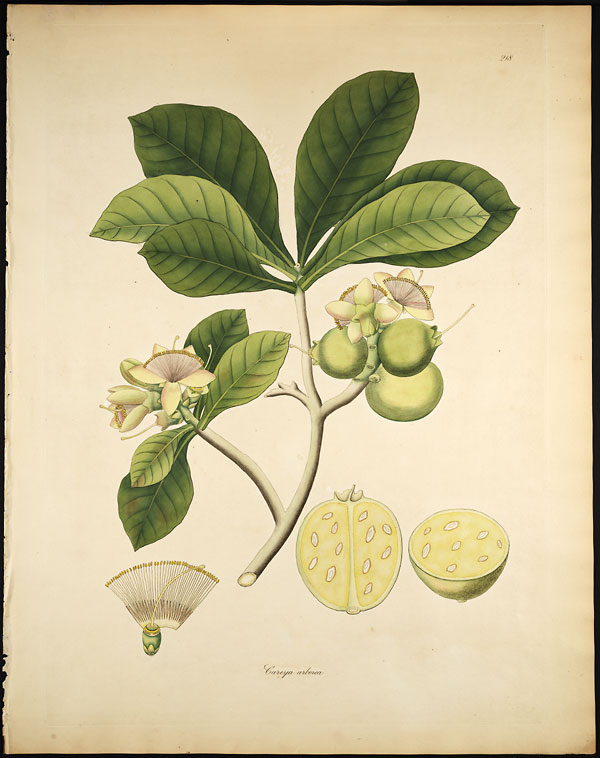
General Description
Its common English names include wild guava, Ceylon oak, patana oak. Careya arborea is a deciduous tree that grows up to 15 metres (49 ft) high. Its leaves turn red in the cold season. Flowers are yellow or white in colour that become large green berries. The tree grows throughout India in forests and grasslands.
Family Context
The Lecythidaceae family is widely distributed. Notable medicinal members include:
- Brazilnut — 1 documented uses
Geographic Distribution
Careya arborea has been recorded in 10 countries and territories worldwide, including India, Cambodia, Laos, Sri Lanka, Myanmar, and others.
Traditional Uses
Careya arborea has been traditionally used for respiratory conditions, skin and wound care, and fever management.
Respiratory conditions.
- Cold
- Cough
Respiratory conditions are addressed through steam inhalation of the herb’s vapors or internal use as a warm tea. The hot infusion acts as an expectorant, helping to loosen phlegm and clear congestion. Some traditions combine it with honey for coughs.
Skin and wound care.
- Eruption
- Sore
For skin conditions, the fresh or dried plant is applied topically as a poultice, wash, or compress. A strong decoction can be used to clean wounds and sores. The antimicrobial properties help prevent infection while promoting tissue repair.
Fever management.
- Fever
Febrifuge preparations are typically administered as hot teas to induce perspiration, which helps the body regulate temperature. The patient is kept warm and encouraged to rest while the herb promotes sweating.
Active Compounds
Phytochemical research has identified 2 compounds in this species: betulin, betulinic-acid.