Botanical Overview
Java-Olive (Canarium indicum) is a species in the Burseraceae family. This species belongs to the Burseraceae family, a group of flowering plants. Although comprehensive ethnobotanical records are limited, phytochemical studies have identified 30 compounds in this species, suggesting potential medicinal value.
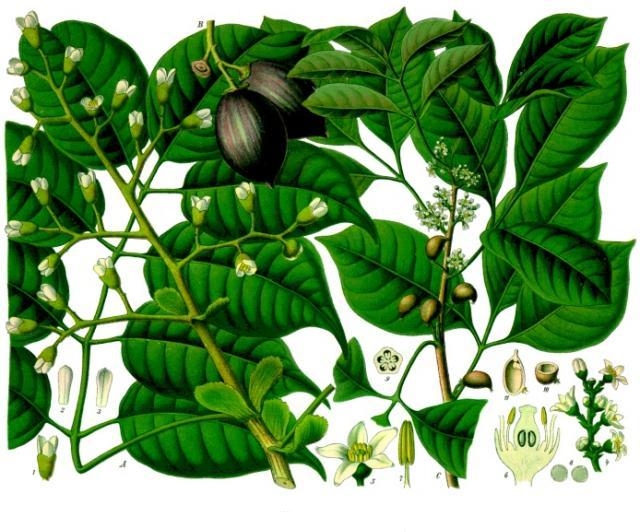
General Description
It is usually found in rainforests, secondary forests, old garden areas, around villages and settlements. It is also used as a shade tree, as a windbreak and in agroforestry. Canarium is important in the world food system as it can be used as a food and timber source, in traditional medicine, intercropping and agroforestry.
Family Context
The Burseraceae family is widely distributed. Notable medicinal members include:
- Gumbolimbo — 41 documented uses
- Gugul — 33 documented uses
- Myrrh — 16 documented uses
- Salaki — 11 documented uses
Geographic Distribution
Java-Olive has been recorded in 10 countries and territories worldwide, including Colombia, Indonesia, Panama, French Polynesia, Papua New Guinea, and others.
Active Compounds
Phytochemical research has identified 30 compounds in this species, including a diverse array of phytochemical classes (see the Complete Chemical Inventory below for the full list).
The identified compounds include the following categories:
- Alkaloid: nitrogenous compounds with diverse pharmacological activities
Research Status
Although this species has documented phytochemical constituents, its ethnobotanical and clinical documentation remains incomplete. Further ethnobotanical and pharmacological research may reveal additional therapeutic applications for this species.