Botanical Overview
Callistemon lanceolatus is a species in the Myrtaceae family. The myrtle family (Myrtaceae) includes trees and shrubs with opposite leaves that contain aromatic oil glands. The flowers are showy with numerous stamens, and the fruits are often fleshy berries or capsules. Many species produce essential oils with antiseptic and antimicrobial properties. Phytochemical data for this species are limited at present.
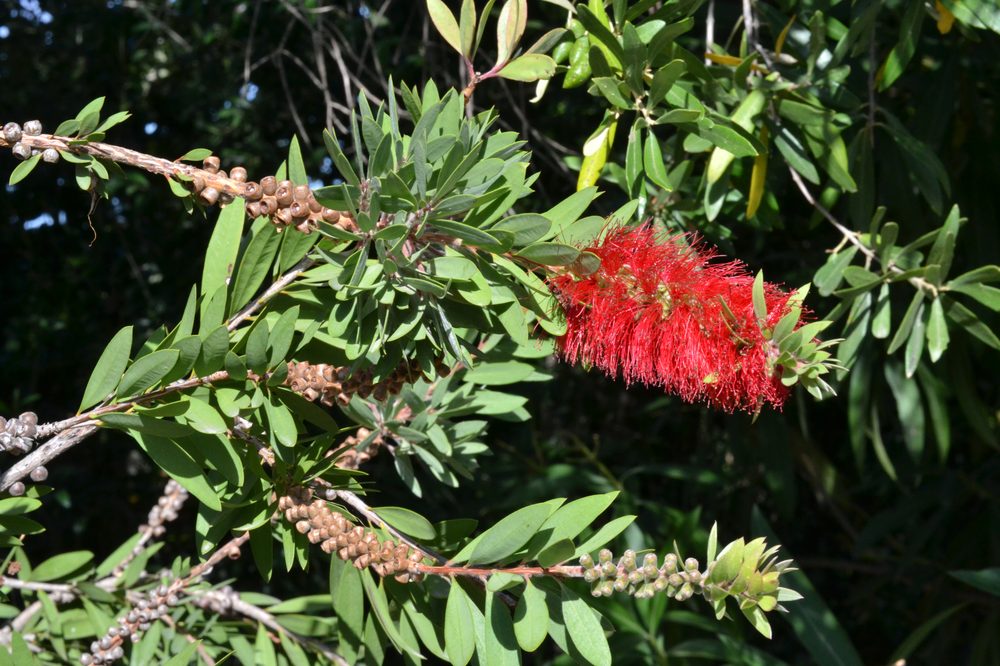
General Description
Some Australian state herbaria continue to use the name Callistemon citrinus. It is a hardy and adaptable species, common in its natural habitat. It is widely cultivated, not only in Australia. It was one of the first Australian plants to be grown outside the country, having been taken to England in 1770 by Joseph Banks. Its showy red flower spikes, present over most of the year in an ideal situation, account for its popularity.
Family Context
The Myrtaceae family is primarily tropical and subtropical. Notable medicinal members include:
- Guava — 57 documented uses
- Melaleuca leucadendron — 49 documented uses
- Clove — 45 documented uses
- Blue Gum — 44 documented uses
Geographic Distribution
Callistemon lanceolatus has been recorded in 10 countries and territories worldwide, including Australia, Brazil, Cameroon, Colombia, India, and others.
Active Compounds
Phytochemical research has identified 2 compounds in this species: betulin, betulinic-acid.
Research Status
Although this species has documented phytochemical constituents, its ethnobotanical and clinical documentation remains incomplete. Additional phytochemical investigation could identify novel bioactive compounds in this plant.