Botanical Overview
Paper Mulberry (Broussonetia papyrifera) is a flowering plant in the Moraceae family. This plant has earned a place in traditional medicine through its consistent therapeutic benefits, recorded across multiple cultures. The fig family (Moraceae) includes trees, shrubs, and climbers with milky sap and alternate leaves. The flowers are small and clustered inside a fleshy receptacle (the fig). Many species produce latex containing proteolytic enzymes and have traditional uses for skin conditions and parasitic infections.
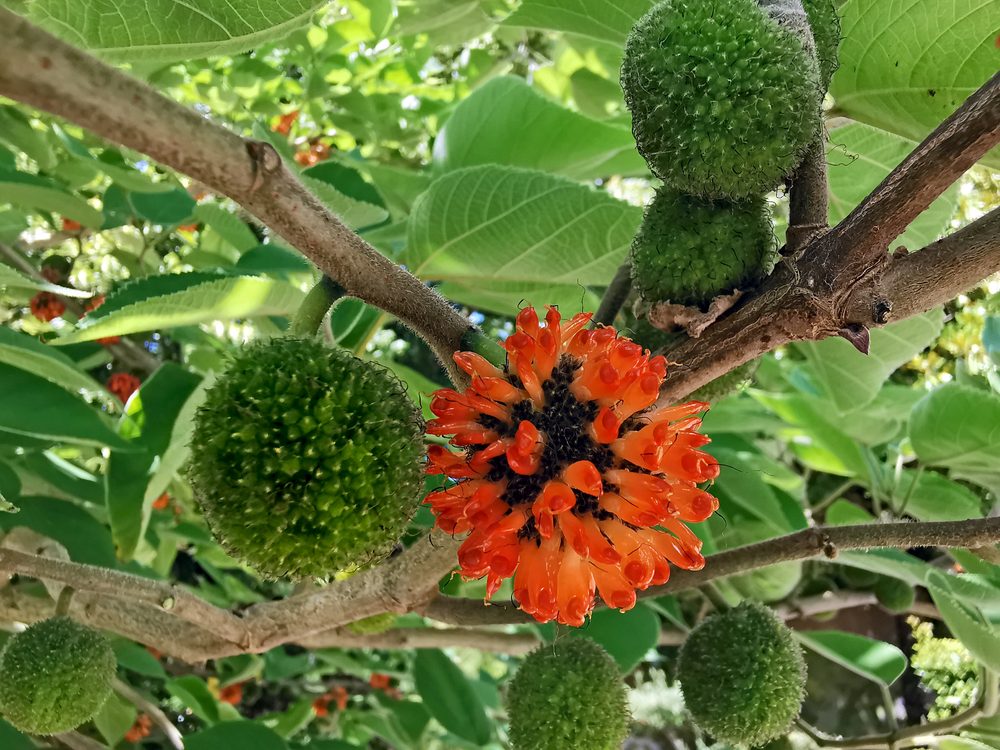
General Description
It is native to East and Southeast Asia, including mainland China, Hong Kong, India, Japan, Korea, Myanmar and Taiwan. It is widely cultivated elsewhere as an introduced species in New Zealand, parts of Europe, the United States, and Africa. The tree is valued for its versatile uses. Its inner bark is traditionally processed into barkcloth and is also an important raw material in papermaking.
Family Context
The Moraceae family is widely distributed. Notable medicinal members include:
- Sang-Pai-Pi — 77 documented uses
- Streblus asper — 35 documented uses
- Fig — 30 documented uses
- Jackfruit — 15 documented uses
Geographic Distribution
Paper Mulberry has been recorded in 10 countries and territories worldwide, including Argentina, China, Spain, France, Hong Kong, and others.
Traditional Uses
Paper Mulberry has been traditionally used for digestive health, skin and wound care, and urinary tract health, among other applications.
Digestive health.
- Diarrhea
- Dyspepsia
- Dysentery
For digestive complaints, the herb is typically prepared as a tea or decoction taken before meals. The bitter compounds stimulate digestive secretions and improve nutrient absorption. Some traditions use the powdered root or leaves in small doses as a stomachic tonic.
Skin and wound care.
- Wound
- Eruption
For skin conditions, the fresh or dried plant is applied topically as a poultice, wash, or compress. A strong decoction can be used to clean wounds and sores. The antimicrobial properties help prevent infection while promoting tissue repair.
Urinary tract health.
- Diuretic
- Nephritis
Urinary tract applications typically involve drinking the herb as a mild tea, which increases urine production and helps flush the urinary system. It may be combined with other demulcent herbs to soothe irritated tissues.
Active Compounds
Phytochemical research has identified 17 compounds in this species, including a diverse array of phytochemical classes (see the Complete Chemical Inventory below for the full list).
The identified compounds include the following categories:
- Flavonoid: antioxidant compounds that protect cells from oxidative damage
- Saponin: soap-like compounds with immune-modulating activity