Botanical Overview
Wild Pineapple (Bromelia pinguin) belongs to the Bromeliaceae family. While not among the most extensively documented medicinal plants, this species has recorded uses that warrant attention from researchers and practitioners. This species belongs to the Bromeliaceae family, a group of flowering plants.
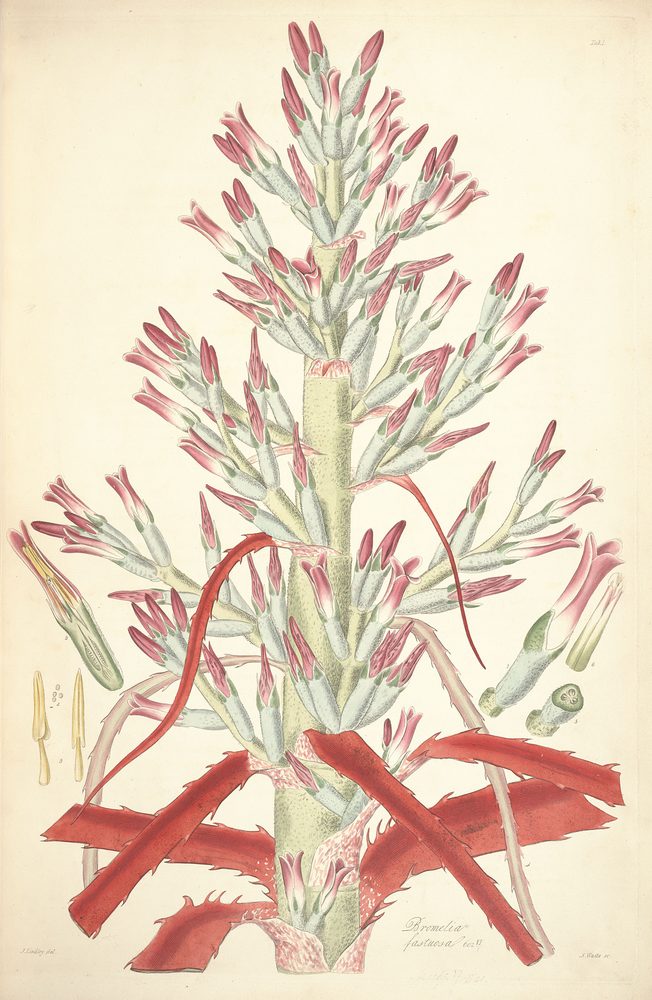
General Description
This species is native to Central America, Mexico, the West Indies, and northern South America. It is also reportedly naturalized in Florida. It is very common in Jamaica, where it is planted as a fence around pasturelands on account of its prickly leaves, and has historically been used as an herbal abortifacient. The plant can be stripped of its pulp, soaked in water, and beaten with a wooden mallet, and it yields a fiber whence thread is made. In Nicaragua and El Salvador it is used to make gruel.
Family Context
The Bromeliaceae family is widely distributed. Notable medicinal members include:
- Pineapple — 28 documented uses
Geographic Distribution
Wild Pineapple has been recorded in 10 countries and territories worldwide, including Colombia, Costa Rica, Cuba, Dominican Republic, Jamaica, and others.
Traditional Uses
Wild Pineapple has been traditionally used for skin and wound care.
Skin and wound care.
- Sore
For skin conditions, the fresh or dried plant is applied topically as a poultice, wash, or compress. A strong decoction can be used to clean wounds and sores. The antimicrobial properties help prevent infection while promoting tissue repair.
Active Compounds
Phytochemical research has identified 18 compounds in this species, including a diverse array of phytochemical classes (see the Complete Chemical Inventory below for the full list).
The identified compounds include the following categories:
- Alkaloid: nitrogenous compounds with diverse pharmacological activities