Botanical Overview
Olibanum (Boswellia sacra) is a species in the Burseraceae family. This species belongs to the Burseraceae family, a group of flowering plants. Although comprehensive ethnobotanical records are limited, phytochemical studies have identified 30 compounds in this species, suggesting potential medicinal value.
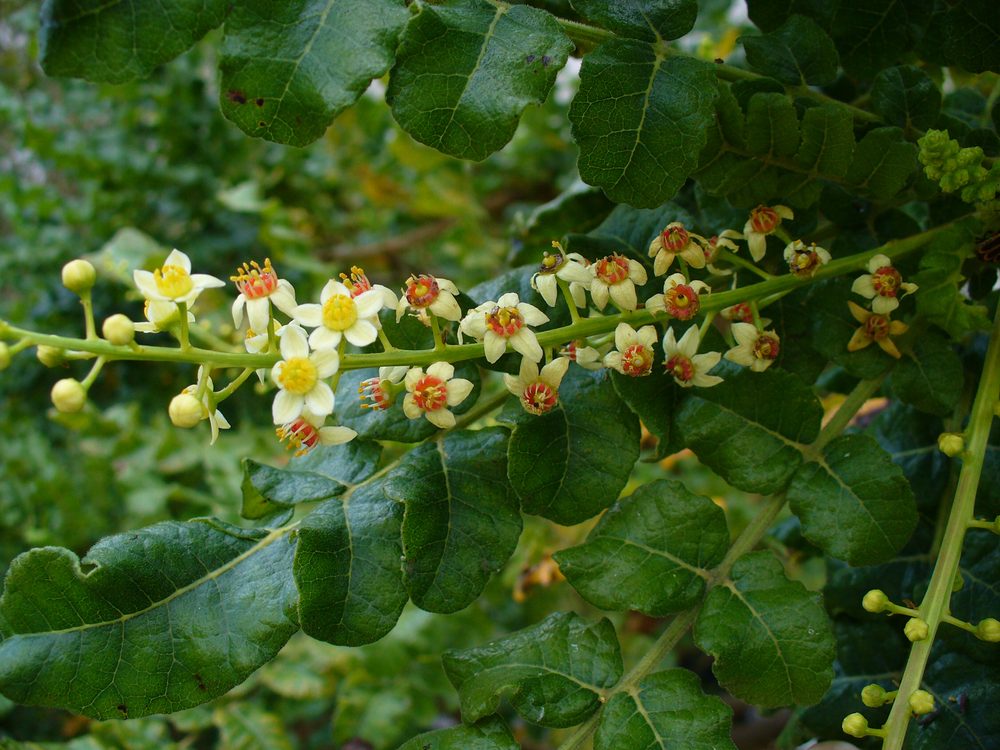
General Description
The olibanum tree is a plant native to the countries of Oman and Yemen, in the south of the Arabian Peninsula, and to Somalia and Ethiopia, in the Horn of Africa. In 2012, it was replanted in Israel in the Middle East, 1,500 years after dying out there.
Family Context
The Burseraceae family is widely distributed. Notable medicinal members include:
- Gumbolimbo — 41 documented uses
- Gugul — 33 documented uses
- Myrrh — 16 documented uses
- Salaki — 11 documented uses
Active Compounds
Phytochemical research has identified 30 compounds in this species, including a diverse array of phytochemical classes (see the Complete Chemical Inventory below for the full list).
The identified compounds include the following categories:
- Alkaloid: nitrogenous compounds with diverse pharmacological activities
Research Status
Although this species has documented phytochemical constituents, its ethnobotanical and clinical documentation remains incomplete. Additional phytochemical investigation could identify novel bioactive compounds in this plant.