Botanical Overview
Betula utilis belongs to the Betulaceae family. Limited but reliable traditional records indicate this plant has recognized medicinal applications in one or more healing traditions. The birch family (Betulaceae) includes trees and shrubs with simple, alternate leaves with serrated margins and prominent stipules. The flowers are arranged in catkins, and the fruits are small nuts or samaras. The bark of many species contains phenolic compounds with antiseptic properties.
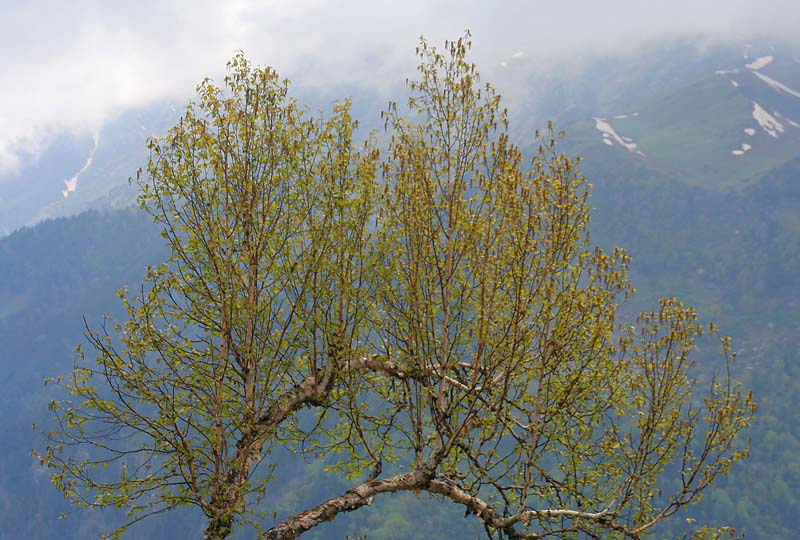
General Description
The Latin specific epithet utilis means “useful”, and refers to the many uses of the different parts of the tree. The white, paper-like bark was used in ancient times as a writing surface for manuscripts of Sanskrit literature. It is still used as paper for the writing of mantras, with the bark placed in an amulet and worn for protection. Selected varieties are used for landscaping throughout the world, even while some areas of its native habitat are being lost due to overuse of the tree for firewood.
Family Context
The Betulaceae family is widely distributed in the Northern Hemisphere. Notable medicinal members include:
- Alnus rubra — 20 documented uses
- Betula alba — 17 documented uses
- Cherry Birch — 16 documented uses
- Black Alder — 10 documented uses
Geographic Distribution
Betula utilis has been recorded in 10 countries and territories worldwide, including Bhutan, China, Germany, Denmark, United Kingdom, and others.
Traditional Uses
Betula utilis has been traditionally used for skin and wound care and reproductive health.
Skin and wound care.
- Burn
- Wound
For skin conditions, the fresh or dried plant is applied topically as a poultice, wash, or compress. A strong decoction can be used to clean wounds and sores. The antimicrobial properties help prevent infection while promoting tissue repair.
Reproductive health.
- Contraceptive
In traditional contexts, reproductive health applications typically involve internal preparations such as teas or decoctions. The herb may be taken at specific times during the menstrual cycle.
Active Compounds
Phytochemical research has identified 2 compounds in this species: betulin, betulinic-acid.