Botanical Overview
Betula populifolia belongs to the Betulaceae family. Limited but reliable traditional records indicate this plant has recognized medicinal applications in one or more healing traditions. The birch family (Betulaceae) includes trees and shrubs with simple, alternate leaves with serrated margins and prominent stipules. The flowers are arranged in catkins, and the fruits are small nuts or samaras. The bark of many species contains phenolic compounds with antiseptic properties.
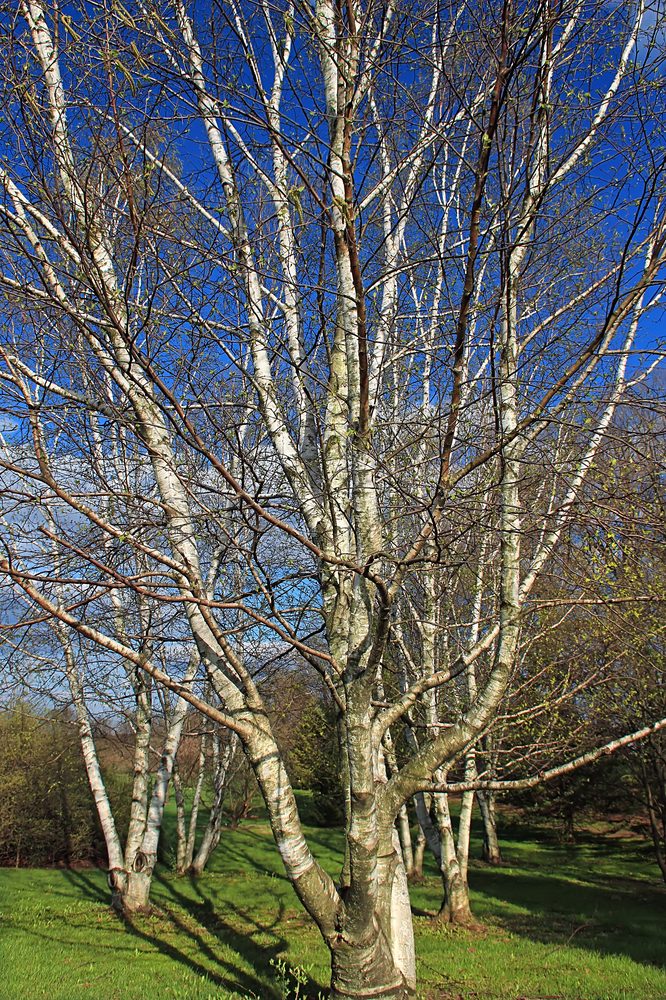
General Description
It is native to eastern North America and is most commonly found in the northeast United States as well as southern Quebec, New Brunswick, and Nova Scotia. The tree is a pioneer species that is commonly found in sites following disturbance, such as fire or logging. Gray birches don’t have as much economic value as other birch species but are still commonly used as ornamental trees.
Family Context
The Betulaceae family is widely distributed in the Northern Hemisphere. Notable medicinal members include:
- Alnus rubra — 20 documented uses
- Betula alba — 17 documented uses
- Cherry Birch — 16 documented uses
- Black Alder — 10 documented uses
Geographic Distribution
Betula populifolia has been recorded in , and United States.
Active Compounds
Phytochemical research has identified 1 compound in this species: betulin.