Botanical Overview
Creeping Barberry (Berberis repens) belongs to the Berberidaceae family. While not among the most extensively documented medicinal plants, this species has recorded uses that warrant attention from researchers and practitioners. The barberry family (Berberidaceae) includes shrubs and herbs with alternate or basal leaves and yellow wood or roots due to alkaloid content. The flowers have six sepals and six petals arranged in whorls, and the fruits are berries or capsules. Many species produce isoquinoline alkaloids like berberine with antimicrobial activity.
General Description
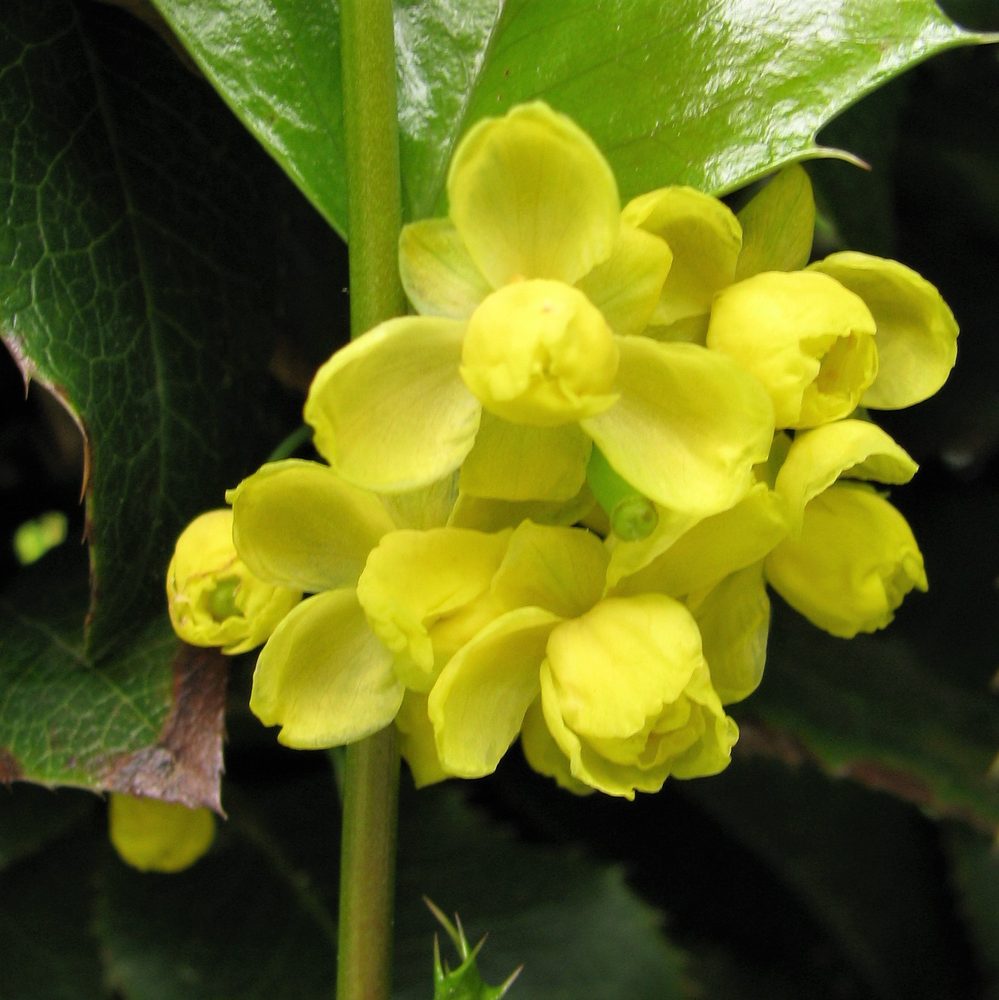
It is low growing shrub that spreads by underground stems. As a species it is well adapted to fire and is a very common understory plant in western forests. An evergreen species, it provides food to deer and elk in winter and can make up a significant part of their diet. The berries are eaten by birds and small mammals, aiding it in spreading to recently disturbed areas. It has found use as a xeric ornamental plant and has escaped from cultivation in areas beyond its native range.
Family Context
The Berberidaceae family is widely distributed in temperate regions. Notable medicinal members include:
- Heavenly Bamboo — 24 documented uses
- Mayapple — 19 documented uses
- Barberry — 17 documented uses
- Japanese Ashberry — 13 documented uses
Geographic Distribution
Creeping Barberry has been recorded in 10 countries and territories worldwide, including Belarus, Canada, Switzerland, Czech Republic, Germany, and others.
Traditional Uses
Creeping Barberry has been traditionally used for respiratory conditions, skin and wound care, and pain and inflammation, among other applications.
Respiratory conditions.
- Cough
Respiratory conditions are addressed through steam inhalation of the herb’s vapors or internal use as a warm tea. The hot infusion acts as an expectorant, helping to loosen phlegm and clear congestion. Some traditions combine it with honey for coughs.
Skin and wound care.
- Wound
For skin conditions, the fresh or dried plant is applied topically as a poultice, wash, or compress. A strong decoction can be used to clean wounds and sores. The antimicrobial properties help prevent infection while promoting tissue repair.
Pain and inflammation.
- Rheumatism
For pain and inflammation, preparations are applied both topically as compresses and taken internally. A warm poultice draws blood to the area and promotes healing, while internal preparations address systemic inflammation.