Botanical Overview
Blue Barberry (Berberis aquifolium) is a species in the Berberidaceae family. The barberry family (Berberidaceae) includes shrubs and herbs with alternate or basal leaves and yellow wood or roots due to alkaloid content. The flowers have six sepals and six petals arranged in whorls, and the fruits are berries or capsules. Many species produce isoquinoline alkaloids like berberine with antimicrobial activity. Further research is needed to document the medicinal properties of this species.
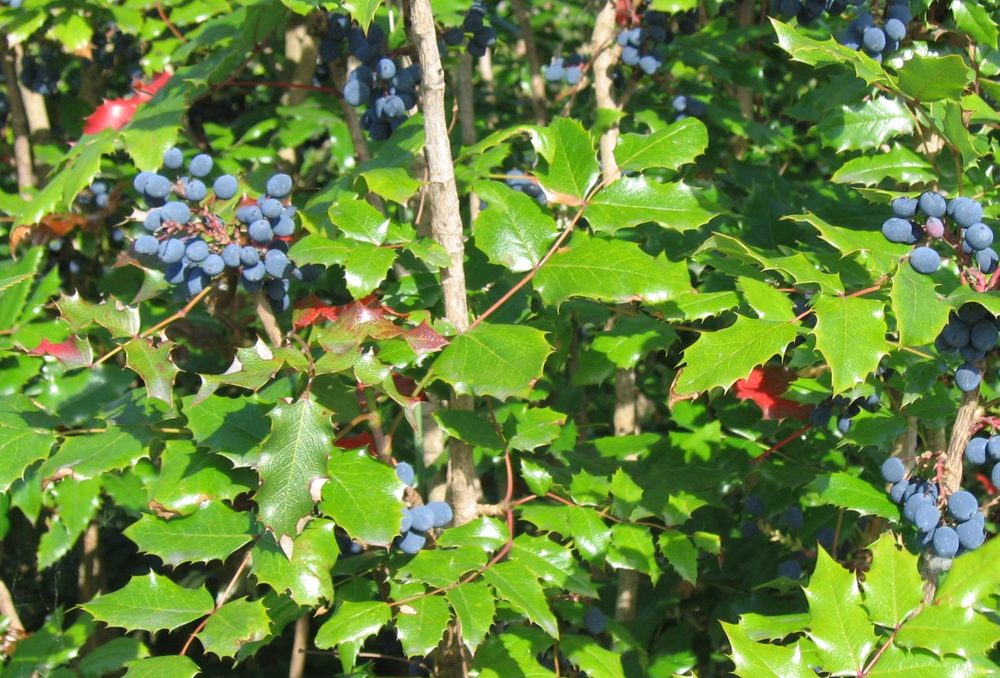
General Description
It is an evergreen shrub growing up to 3 metres (10 ft) tall and 1. 5 m (5 ft) wide. It has pinnate leaves consisting of spiny leaflets, exhibiting dense clusters of yellow flowers in early spring, followed by dark bluish-black berries. The berries are a part of the traditional diet of some indigenous peoples of the Pacific Northwest and the species serves as the state flower of Oregon.
Family Context
The Berberidaceae family is widely distributed in temperate regions. Notable medicinal members include:
- Heavenly Bamboo — 24 documented uses
- Mayapple — 19 documented uses
- Barberry — 17 documented uses
- Japanese Ashberry — 13 documented uses
Geographic Distribution
Blue Barberry has been recorded in 10 countries and territories worldwide, including Austria, Belgium, Canada, Czech Republic, Germany, and others.
Research Status
This species has not been extensively studied for medicinal properties. Further ethnobotanical and pharmacological research may reveal additional therapeutic applications for this species.