Botanical Overview
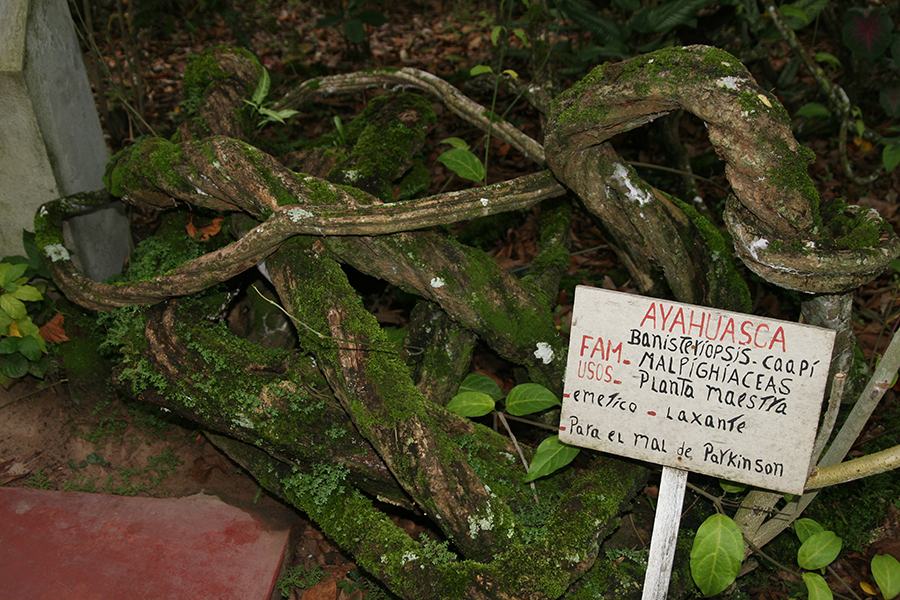
Ayahuasca (Banisteriopsis caapi) belongs to the Malpighiaceae family. Limited but reliable traditional records indicate this plant has recognized medicinal applications in one or more healing traditions. This species belongs to the Malpighiaceae family, a group of flowering plants.
General Description
It is commonly used as an ingredient of ayahuasca, a decoction with a long history of its entheogenic use and holds status as a “plant teacher” among the Indigenous peoples of the Amazon rainforest. It was used by Indigenous peoples of South America for centuries, but it was first documented by Europeans in the 16th century and formally identified by botanist Richard Spruce in 1851. According to The CRC World Dictionary of Plant Names by Umberto Quattrocchi, the naming of the genus Banisteriopsis was dedicated to John Banister, a 17th-century English clergyman and naturalist. An earlier name for the genus was Banisteria and the plant is sometimes referred to as Banisteria caapi. Other names include Banisteria quitensis, Banisteriopsis inebrians, and Banisteriopsis quitensis. It is a giant vine that can grow up to 30 meters long, with pale flowers that bloom infrequently and resembles related species like Banisteriopsis membranifolia and B. muricata. It contains beta-carboline alkaloids and polyphenols. Its legal status varies by country: it is largely unregulated in the United States (with specific religious exemptions for use of the ayahuasca decoction), ambiguously legal in Canada and parts of Australia, and effectively illegal in France despite past religious use rulings.
Family Context
The Malpighiaceae family is widely distributed. Notable medicinal members include:
Geographic Distribution
Ayahuasca has been recorded in 10 countries and territories worldwide, including Argentina, Bolivia, Brazil, Colombia, Costa Rica, and others.
Traditional Uses
Ayahuasca has been traditionally used for nervous system disorders.
Nervous system disorders.
- Narcotic
Nervous system support involves taking the herb as a warm tea, often in the evening or before bed. The calming compounds interact with neurotransmitter systems to promote relaxation and restful sleep.
Active Compounds
Phytochemical research has identified 18 compounds in this species, including a diverse array of phytochemical classes (see the Complete Chemical Inventory below for the full list).
The identified compounds include the following categories:
- Alkaloid: nitrogenous compounds with diverse pharmacological activities
- Saponin: soap-like compounds with immune-modulating activity