Botanical Overview
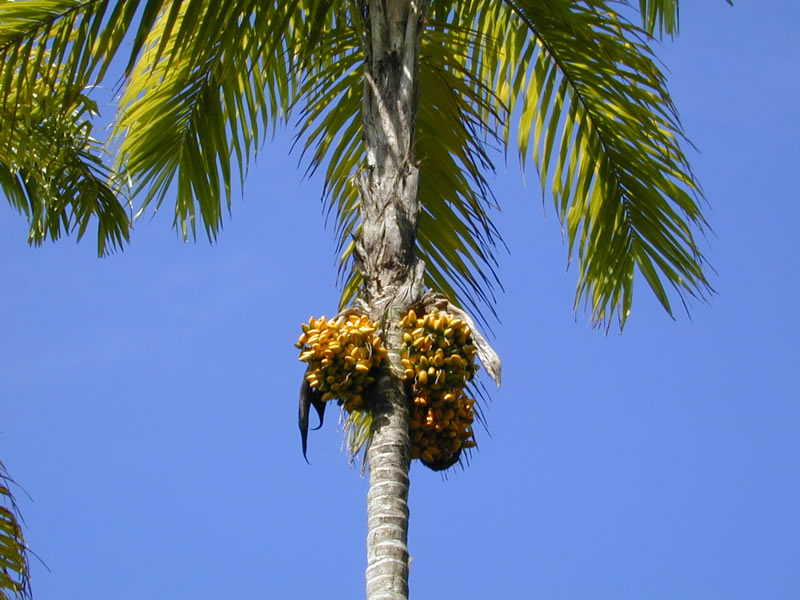
Peach palm (Bactris gasipaes) belongs to the Arecaceae family. Limited but reliable traditional records indicate this plant has recognized medicinal applications in one or more healing traditions. The palm family (Arecaceae) includes trees, shrubs, and climbers with unbranched stems topped by a crown of large, compound, evergreen leaves. The flowers are small and clustered on branched inflorescences, and the fruits are typically drupes. Palms provide oils, waxes, and other useful products.
General Description
It is well spread in these regions, where it is often cultivated by smallholders in agroforestry systems or more rarely, in monoculture. Common names include peach palm in English, among others used in South American countries. It is a long-lived perennial plant that is productive for 50 to 75 years on average. Its population has an important genetic diversity, leading to numerous fruits, colors, and qualities. The fruits are edible and nutritious but need to be cooked for 30 minutes to five hours. They also benefit many animals in the wild. Peach palms are also cultivated for the heart of palm, and the trunk can make valuable timber.
Family Context
The Arecaceae family is primarily tropical and subtropical. Notable medicinal members include:
- Coconut — 93 documented uses
- Betel Nut — 52 documented uses
- Date Palm — 42 documented uses
- Dragon’s Blood — 13 documented uses
Geographic Distribution
Peach palm has been recorded in 10 countries and territories worldwide, including Bolivia, Brazil, Colombia, Costa Rica, Ecuador, and others.
Traditional Uses
Peach palm has been traditionally used for digestive health and pain and inflammation.
Digestive health.
- Ache(Stomach)
For digestive complaints, the herb is typically prepared as a tea or decoction taken before meals. The bitter compounds stimulate digestive secretions and improve nutrient absorption. Some traditions use the powdered root or leaves in small doses as a stomachic tonic.
Pain and inflammation.
- Ache(Head)
For pain and inflammation, preparations are applied both topically as compresses and taken internally. A warm poultice draws blood to the area and promotes healing, while internal preparations address systemic inflammation.
Active Compounds
Phytochemical research has identified 24 compounds in this species, including a diverse array of phytochemical classes (see the Complete Chemical Inventory below for the full list).
The identified compounds include the following categories:
- Alkaloid: nitrogenous compounds with diverse pharmacological activities