Botanical Overview
Japanese Aucuba (Aucuba japonica) belongs to the Cornaceae family. Limited but reliable traditional records indicate this plant has recognized medicinal applications in one or more healing traditions. This species belongs to the Cornaceae family, a group of flowering plants.
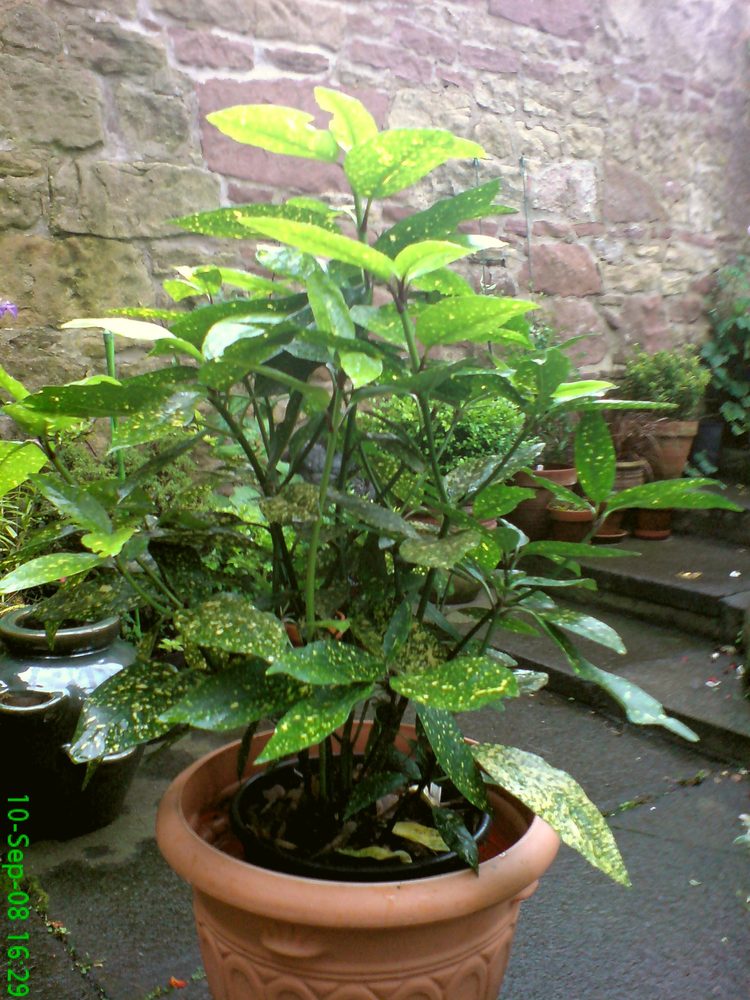
General Description
S. ), is a shrub native to rich forest soils of moist valleys, thickets, by streams and near shaded moist rocks in China, Korea, and Japan. This is the species of Aucuba commonly seen in gardens - often in variegated form. The leaves are opposite, broad lanceolate, 5–8 cm (2. 0–3. 1 in) long and 2–5 cm (0. 79–1. 97 in) wide. Aucuba japonica are dioecious. The flowers are small, 4–8 mm (0. 16–0. 31 in) diameter, each with four purplish-brown petals; they are produced in clusters of 10-30 in a loose cyme. The fruit is a red drupe approximately 1 cm (0. 39 in) in diameter that is avoided by birds.
Family Context
The Cornaceae family is widely distributed. Notable medicinal members include:
- Chinese Dogwood — 25 documented uses
- American Dogwood — 15 documented uses
- Cornus macrophylla — 3 documented uses
- Happy Tree — 1 documented uses
Geographic Distribution
Japanese Aucuba has been recorded in 10 countries and territories worldwide, including Austria, Belgium, Spain, France, United Kingdom, and others.
Traditional Uses
Japanese Aucuba has been traditionally used for skin and wound care and pain and inflammation.
Skin and wound care.
- Burn
For skin conditions, the fresh or dried plant is applied topically as a poultice, wash, or compress. A strong decoction can be used to clean wounds and sores. The antimicrobial properties help prevent infection while promoting tissue repair.
Pain and inflammation.
- Swelling
For pain and inflammation, preparations are applied both topically as compresses and taken internally. A warm poultice draws blood to the area and promotes healing, while internal preparations address systemic inflammation.
Active Compounds
Phytochemical research has identified 1 compound in this species: aucubin.