Botanical Overview
Belladonna (Atropa bella-donna) belongs to the Solanaceae family. Limited but reliable traditional records indicate this plant has recognized medicinal applications in one or more healing traditions. The nightshade family (Solanaceae) includes herbs, shrubs, and small trees with alternate leaves and star-shaped or trumpet-shaped flowers. The fruits are typically berries or capsules. Many species produce potent alkaloids including tropanes, solanines, and nicotine, making this family both medicinally valuable and potentially toxic.
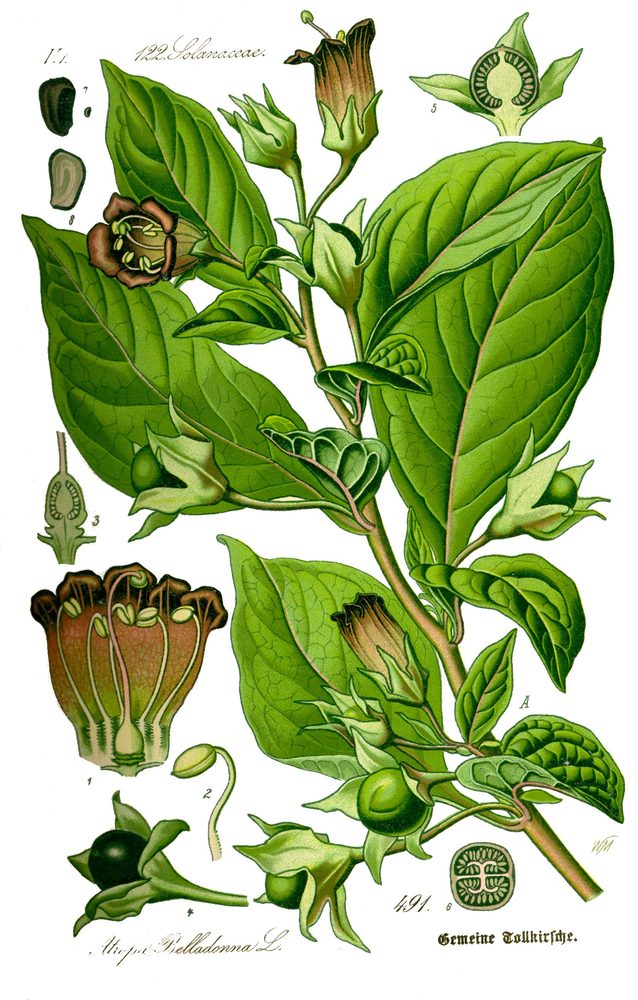
General Description
It is native to Europe and Western Asia, including Turkey, its distribution extending from England in the west to western Ukraine and the Iranian province of Gilan in the east. It is also naturalised or introduced in some parts of Canada, North Africa and the United States.
Family Context
The Solanaceae family is widely distributed worldwide. Notable medicinal members include:
- Black Nightshade — 100 documented uses
- Tobacco — 80 documented uses
- Jimsonweed — 66 documented uses
- Hindu Datura — 65 documented uses
Geographic Distribution
Belladonna has been recorded in 10 countries and territories worldwide, including Austria, Belgium, Switzerland, Czech Republic, Germany, and others.
Active Compounds
Phytochemical research has identified 30 compounds in this species, including a diverse array of phytochemical classes (see the Complete Chemical Inventory below for the full list).
The identified compounds include the following categories:
- Flavonoid: antioxidant compounds that protect cells from oxidative damage
- Sterol: cholesterol-like compounds with anti-inflammatory properties
- Alkaloid: nitrogenous compounds with diverse pharmacological activities