Botanical Overview
Levant Wormseed (Artemisia cina) belongs to the Asteraceae family. While not among the most extensively documented medicinal plants, this species has recorded uses that warrant attention from researchers and practitioners. The daisy family (Asteraceae) is one of the largest plant families, characterized by composite flower heads (capitula) that contain many small florets surrounded by bracts. Plants range from tiny alpine herbs to large tropical trees. The family includes many medicinally important species with bitter compounds and essential oils.
General Description
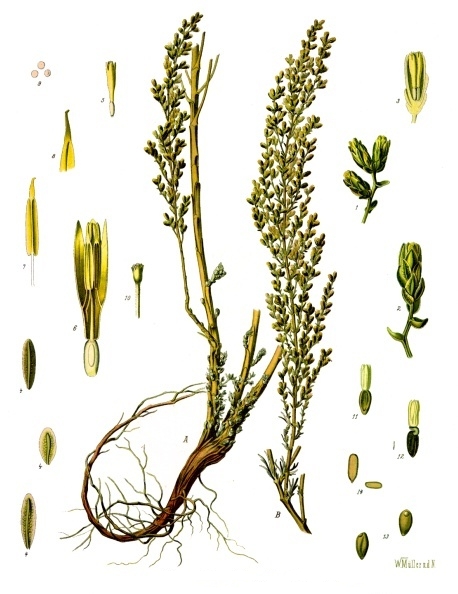
Its dried flowerheads are the source of the vermifugic drug santonin since ancient times. Its common names arise from its known ability to expel worms. The powder is grayish-green in colour with an aromatic odour and a bitter taste. Dysphania ambrosioides is another plant with the common name wormseed, called epazote in Mexican cuisine. The plant is characterised by its spherical pollen grains, which are typical in the Asteraceae; a fibrous layer on anthers; lignified, elongated, hypodermal sclerids; and clusters of calcium oxalate crystals. It is native to China, Pakistan, Russia, Turkestan, Kazakhstan, and Kyrgyzstan. It is referenced in the short story “Funes the Memorious” by Jorge Luis Borges.
Family Context
The Asteraceae family is extremely large and diverse. Notable medicinal members include:
- Yarrow — 63 documented uses
- Gobo — 63 documented uses
- Mugwort — 55 documented uses
- Sunflower — 52 documented uses
Geographic Distribution
Levant Wormseed has been recorded in 10 countries and territories worldwide, including Afghanistan, China, Iran, Japan, Kazakhstan, and others.
Traditional Uses
Levant Wormseed has been traditionally used for digestive health.
Digestive health.
- Vermifuge
For digestive complaints, the herb is typically prepared as a tea or decoction taken before meals. The bitter compounds stimulate digestive secretions and improve nutrient absorption. Some traditions use the powdered root or leaves in small doses as a stomachic tonic.
Active Compounds
Phytochemical research has identified 16 compounds in this species, including a diverse array of phytochemical classes (see the Complete Chemical Inventory below for the full list).
The identified compounds include the following categories:
- Alkaloid: nitrogenous compounds with diverse pharmacological activities
- Tannin: astringent compounds that tighten tissues and resist infection