Botanical Overview
Prickly Poppy (Argemone mexicana) is a flowering plant in the Papaveraceae family. Traditional medicine systems have documented several valuable applications for this species, supported by its observed therapeutic effects. The poppy family (Papaveraceae) includes herbs with milky or colored sap and showy flowers with two or three sepals that fall off as the flower opens. The fruits are capsules with many small seeds. This family produces benzylisoquinoline alkaloids including morphine, codeine, and sanguinarine.
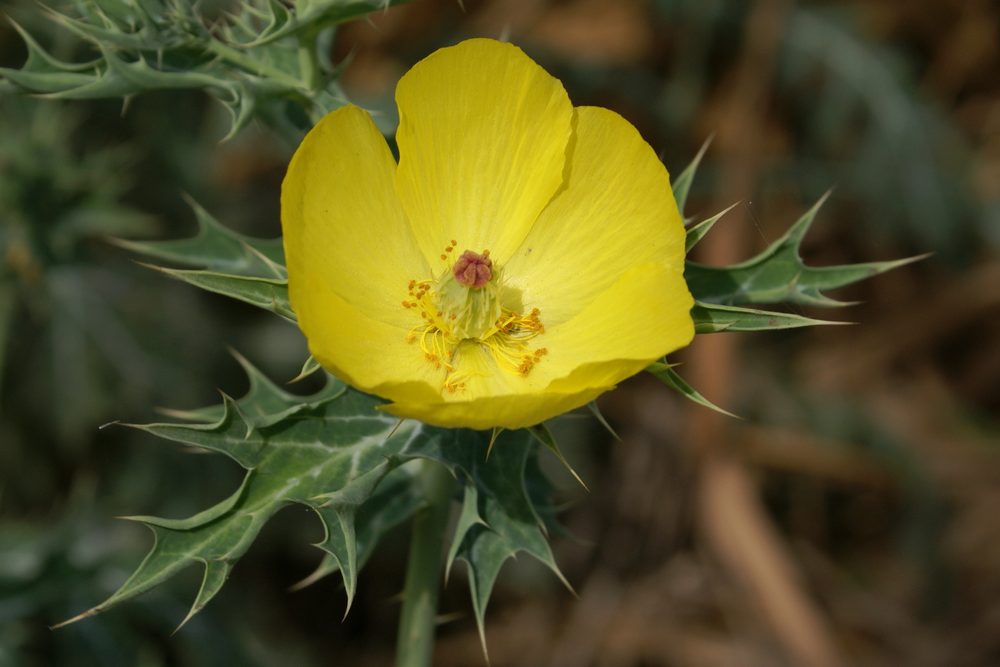
General Description
An extremely hardy pioneer plant, it is tolerant of drought and poor soil, often being the only cover on new road cuttings or verges. It has bright yellow latex. It is poisonous to grazing animals, and it is rarely eaten, but it has been used medicinally by many peoples, including those in its native area, as well as the indigenous peoples of the western United States, parts of Mexico, and many parts of India. In India, during the colorful festival Holika Dahan, adults and children worship by offering flowers, and this species is in its maximum flowering phase during March when the Holi festival is celebrated. It is also referred to as “Kanteli Ka Phul” and “Satyanashi” in India.
Family Context
The Papaveraceae family is widely distributed. Notable medicinal members include:
- Opium Poppy — 69 documented uses
- Tree Poppy — 30 documented uses
- Bloodroot — 26 documented uses
- Celandine — 24 documented uses
Geographic Distribution
Prickly Poppy has been recorded in 10 countries and territories worldwide, including Brazil, Cape Verde, Spain, India, Mexico, and others.
Traditional Uses
Prickly Poppy has been traditionally used for digestive health, respiratory conditions, and skin and wound care, among other applications.
Digestive health.
- Purgative
- Laxative
- Colic
For digestive complaints, the herb is typically prepared as a tea or decoction taken before meals. The bitter compounds stimulate digestive secretions and improve nutrient absorption. Some traditions use the powdered root or leaves in small doses as a stomachic tonic.
Respiratory conditions.
- Expectorant
- Catarrh
- Cold
Respiratory conditions are addressed through steam inhalation of the herb’s vapors or internal use as a warm tea. The hot infusion acts as an expectorant, helping to loosen phlegm and clear congestion. Some traditions combine it with honey for coughs.
Skin and wound care.
- Skin
- Scabies
- Eruption
For skin conditions, the fresh or dried plant is applied topically as a poultice, wash, or compress. A strong decoction can be used to clean wounds and sores. The antimicrobial properties help prevent infection while promoting tissue repair.
Active Compounds
Phytochemical research has identified 29 compounds in this species, including a diverse array of phytochemical classes (see the Complete Chemical Inventory below for the full list).
The identified compounds include the following categories:
- Flavonoid: antioxidant compounds that protect cells from oxidative damage
- Alkaloid: nitrogenous compounds with diverse pharmacological activities
- Tannin: astringent compounds that tighten tissues and resist infection